

Introduction
Multiple sclerosis isn’t just a condition—it’s an experience that unfolds differently for every person. Some notice subtle changes at first: a tingling sensation, blurred vision, or unexplained fatigue. Others face more noticeable disruptions that interfere with daily routines.
What makes multiple sclerosis (MS) particularly challenging is its unpredictability. It doesn’t follow a fixed pattern, and symptoms may come and go or gradually worsen over time.
For individuals in Florida and across the United States, access to reliable, patient-centered care matters. Platforms like
Venice Care
are helping bridge the gap between medical knowledge and real-world support, making it easier to understand and manage neurological conditions like MS.
What Is Multiple Sclerosis? | A Clear Understanding of This Neurological Disorder
Multiple sclerosis is a chronic autoimmune disease that targets the central nervous system (CNS), which includes the brain, spinal cord, and optic nerves. In MS, the immune system mistakenly attacks myelin—the protective sheath that surrounds nerve fibers.
When myelin is damaged, nerve signals slow down or become disrupted entirely. This leads to communication breakdowns between the brain and the rest of the body.
Over time, repeated immune attacks can cause permanent nerve damage, contributing to long-term disability in some individuals.
Why MS Is Considered an Autoimmune Condition
- The immune system attacks healthy tissue
- Inflammation damages nerve pathways
- The body struggles to repair myelin effectively
How MS Affects the Body
- Movement and coordination
- Vision and sensory perception
- Cognitive function and memory
- Energy levels and endurance
MS doesn’t just affect physical health—it can influence emotional well-being and daily independence as well.
| Aspect | Details | Impact on the Body |
|---|---|---|
| Definition | Chronic autoimmune disease affecting the central nervous system (brain, spinal cord, optic nerves) | Disrupts communication between brain and body |
| Cause Mechanism | Immune system attacks myelin (protective nerve covering) | Slows or blocks nerve signals |
| Nerve Damage | Repeated immune attacks damage nerve fibers over time | Can lead to permanent disability |
| Autoimmune Response | Body attacks healthy tissue instead of protecting it | Triggers inflammation and nerve damage |
| Inflammation Effect | Swelling damages nerve pathways | Interferes with normal neurological function |
| Myelin Repair Issue | Body struggles to repair damaged myelin | Leads to long-term progression of symptoms |
| Physical Impact | Affects movement and coordination | Difficulty walking, muscle weakness |
| Sensory Impact | Affects vision and sensation | Blurred vision, numbness, tingling |
| Cognitive Impact | Affects brain function and memory | Reduced focus, slower thinking |
| Energy Impact | Impacts stamina and endurance | Persistent fatigue |
| Emotional Impact | Influences mental and emotional health | Anxiety, mood changes, reduced independence |
Early Signs and Symptoms of Multiple Sclerosis | What to Watch For
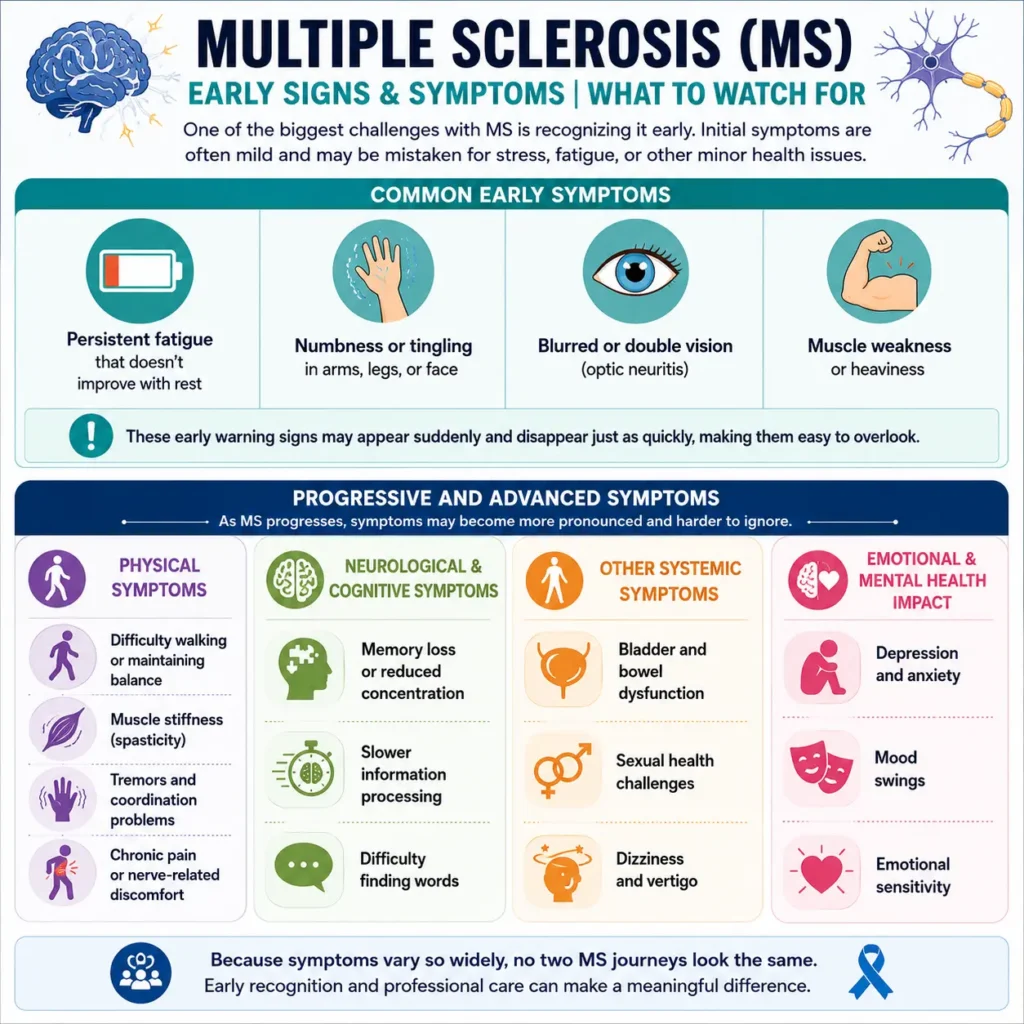
One of the biggest challenges with MS is recognizing it early. Initial symptoms are often mild and may be mistaken for stress, fatigue, or other minor health issues.
Common Early Symptoms
- Persistent fatigue that doesn’t improve with rest
- Numbness or tingling in arms, legs, or face
- Blurred or double vision (optic neuritis)
- Muscle weakness or heaviness
These early warning signs may appear suddenly and disappear just as quickly, making them easy to overlook.
Progressive and Advanced Symptoms of MS
As MS progresses, symptoms may become more pronounced and harder to ignore.
Physical Symptoms
- Difficulty walking or maintaining balance
- Muscle stiffness (spasticity)
- Tremors and coordination problems
- Chronic pain or nerve-related discomfort
Neurological and Cognitive Symptoms
- Memory loss or reduced concentration
- Slower information processing
- Difficulty finding words
Other Systemic Symptoms
- Bladder and bowel dysfunction
- Sexual health challenges
- Dizziness and vertigo
Emotional and Mental Health Impact
- Depression and anxiety
- Mood swings
- Emotional sensitivity
Because symptoms vary so widely, no two MS journeys look the same.
What Causes Multiple Sclerosis? | Exploring Triggers and Risk Factors
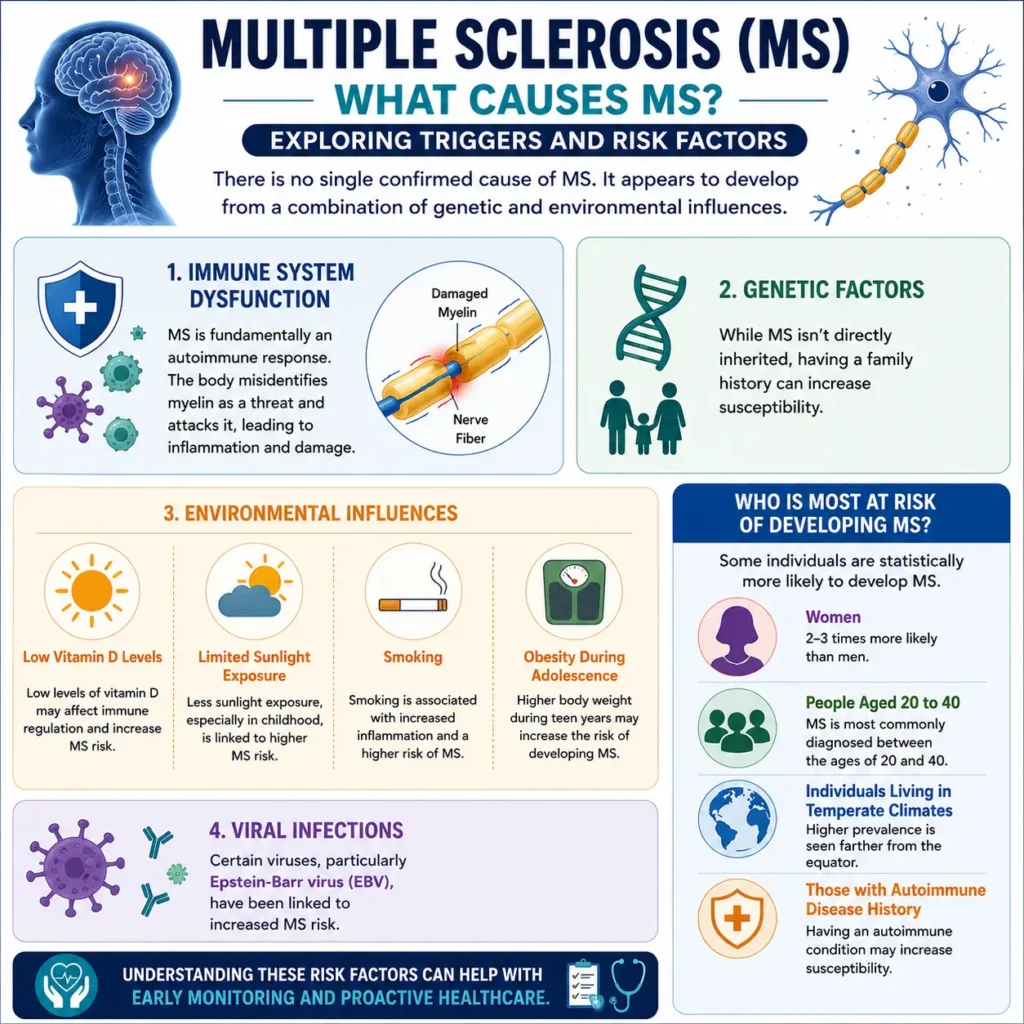
Despite decades of research, there’s no single confirmed cause of MS. Instead, it appears to develop from a combination of genetic and environmental influences.
Immune System Dysfunction
MS is fundamentally an autoimmune response. The body misidentifies myelin as a threat and attacks it, leading to inflammation and damage.
Genetic Factors
While MS isn’t directly inherited, having a family history can increase susceptibility.
Environmental Influences
- Low vitamin D levels
- Limited sunlight exposure
- Smoking
- Obesity during adolescence
Viral Infections
Certain viruses, particularly Epstein-Barr virus (EBV), have been linked to increased MS risk.
Who Is Most at Risk of Developing MS?
Some individuals are statistically more likely to develop MS.
Higher Risk Groups
- Women (2–3 times more likely than men)
- People aged 20 to 40
- Individuals living in temperate climates
- Those with autoimmune disease history
Understanding these risk factors can help with early monitoring and proactive healthcare.
Types of Multiple Sclerosis | Understanding Disease Patterns
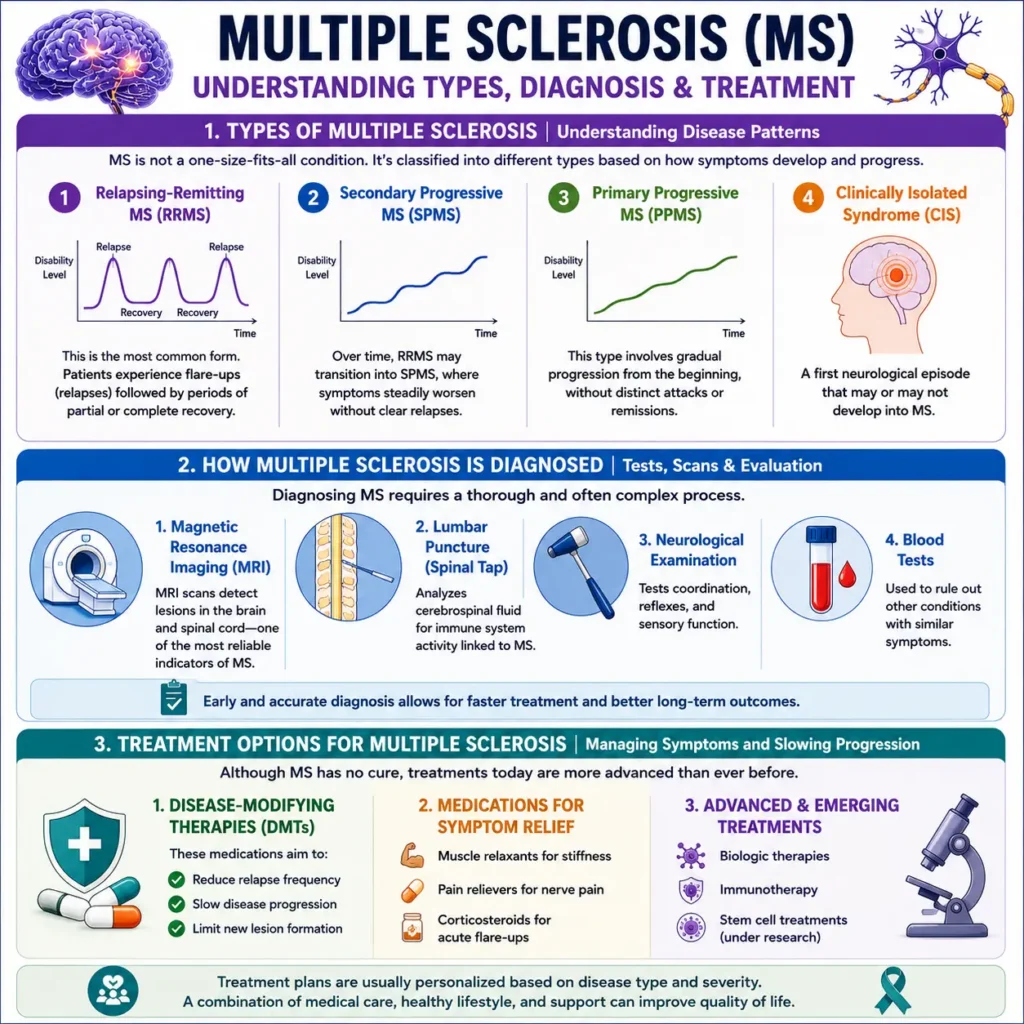
MS is not a one-size-fits-all condition. It’s classified into different types based on how symptoms develop and progress.
Relapsing-Remitting MS (RRMS)
This is the most common form. Patients experience flare-ups (relapses) followed by periods of partial or complete recovery.
Secondary Progressive MS (SPMS)
Over time, RRMS may transition into SPMS, where symptoms steadily worsen without clear relapses.
Primary Progressive MS (PPMS)
This type involves gradual progression from the beginning, without distinct attacks or remissions.
Clinically Isolated Syndrome (CIS)
A first neurological episode that may or may not develop into MS.
How Multiple Sclerosis Is Diagnosed | Tests, Scans & Evaluation
Diagnosing MS requires a thorough and often complex process.
Magnetic Resonance Imaging (MRI)
MRI scans detect lesions in the brain and spinal cord—one of the most reliable indicators of MS.
Lumbar Puncture (Spinal Tap)
Analyzes cerebrospinal fluid for immune system activity linked to MS.
Neurological Examination
Tests coordination, reflexes, and sensory function.
Blood Tests
Used to rule out other conditions with similar symptoms.
Early and accurate diagnosis allows for faster treatment and better long-term outcomes.
Treatment Options for Multiple Sclerosis | Managing Symptoms and Slowing Progression
Although MS has no cure, treatments today are more advanced than ever before.
Disease-Modifying Therapies (DMTs)
These medications aim to:
- Reduce relapse frequency
- Slow disease progression
- Limit new lesion formation
Medications for Symptom Relief
- Muscle relaxants for stiffness
- Pain relievers for nerve pain
- Corticosteroids for acute flare-ups
Advanced and Emerging Treatments
- Biologic therapies
- Immunotherapy
- Stem cell treatments (under research)
Treatment plans are usually personalized based on disease type and severity.
Lifestyle Changes That Help Manage Multiple Sclerosis
Medical treatment alone isn’t enough—daily habits play a crucial role.
Diet and Nutrition
- Anti-inflammatory foods (fruits, vegetables, healthy fats)
- Omega-3 fatty acids
- Adequate hydration
Exercise and Physical Activity
- Low-impact workouts like yoga or swimming
- Strength training for muscle support
- Balance and coordination exercises
Stress Management
- Meditation and mindfulness
- Breathing exercises
- Therapy or counseling
| Category | Key Actions | Benefits for MS Management |
|---|---|---|
| Diet & Nutrition | Anti-inflammatory foods, omega-3s, proper hydration | Supports immune health, reduces inflammation, improves energy |
| Exercise & Physical Activity | Yoga, swimming, strength training, balance exercises | Enhances mobility, muscle strength, and coordination |
| Stress Management | Meditation, breathing exercises, therapy | Reduces stress and helps prevent symptom flare-ups |
| Mental Health Support | Support groups, counseling, and a strong support system | Improves emotional well-being and coping ability |
Mental Health and Emotional Well-Being in MS
Living with MS can be emotionally demanding. Uncertainty, physical limitations, and lifestyle changes often affect mental health.
Common Emotional Challenges
- Anxiety about disease progression
- Depression linked to chronic illness
- Social isolation
Support Strategies
- Joining MS support groups
- Talking to mental health professionals
- Building a strong support system
Taking care of emotional health is just as important as managing physical symptoms.
Living With Multiple Sclerosis | Long-Term Outlook
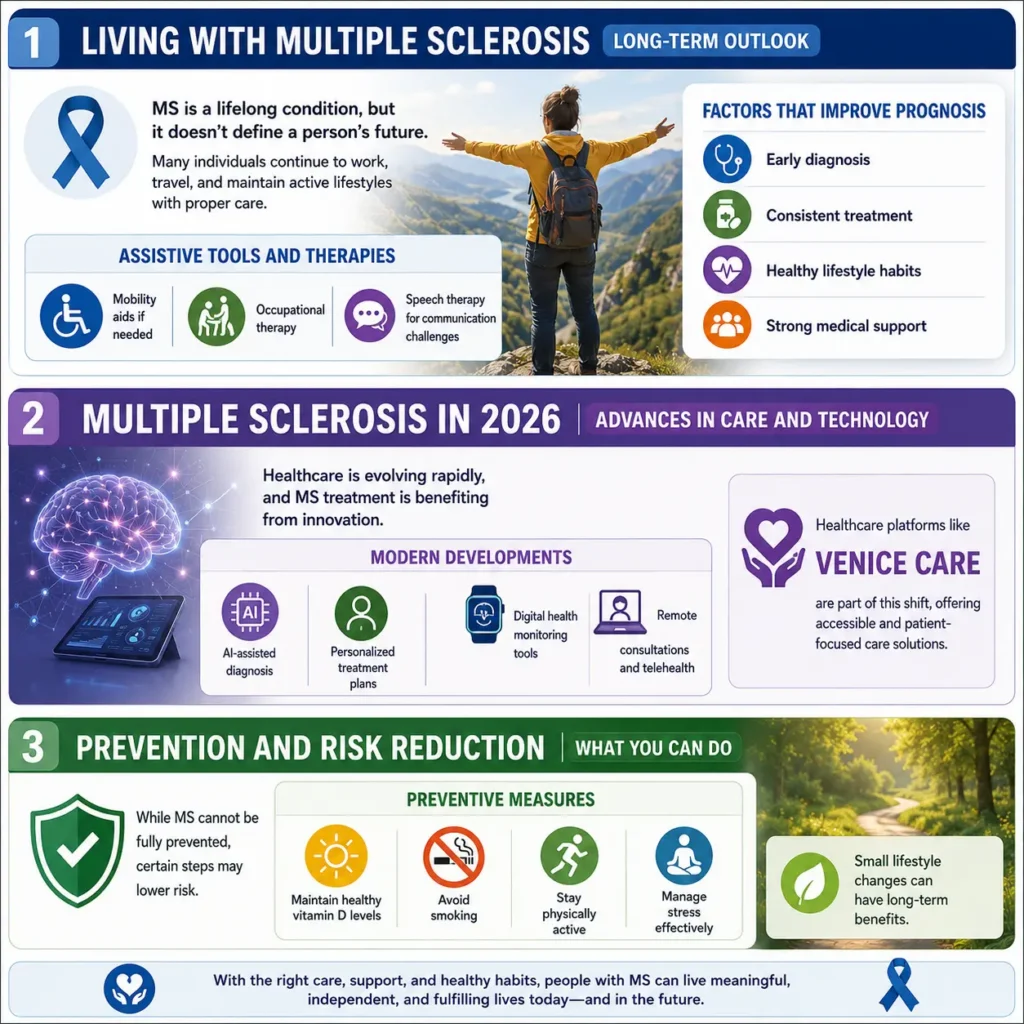
MS is a lifelong condition, but it doesn’t define a person’s future.
Many individuals continue to work, travel, and maintain active lifestyles with proper care.
Factors That Improve Prognosis
- Early diagnosis
- Consistent treatment
- Healthy lifestyle habits
- Strong medical support
Assistive Tools and Therapies
- Mobility aids if needed
- Occupational therapy
- Speech therapy for communication challenges
Multiple Sclerosis in 2026 | Advances in Care and Technology
Healthcare is evolving rapidly, and MS treatment is benefiting from innovation.
Modern Developments
- AI-assisted diagnosis
- Personalized treatment plans
- Digital health monitoring tools
- Remote consultations and telehealth
Healthcare platforms like
Venice Care
are part of this shift, offering accessible and patient-focused care solutions.
Prevention and Risk Reduction | What You Can Do
While MS cannot be fully prevented, certain steps may lower risk.
Preventive Measures
- Maintain healthy vitamin D levels
- Avoid smoking
- Stay physically active
- Manage stress effectively
Small lifestyle changes can have long-term benefits.
Why Choose Venice Care for Multiple Sclerosis Treatment?
Choosing the right care provider for multiple sclerosis can significantly impact how well the condition is managed over time. Venice Care stands out by offering a patient-centered approach that focuses on personalized treatment plans rather than a one-size-fits-all model. Since MS symptoms and progression vary from person to person, this tailored strategy ensures better symptom control, early diagnosis, and more effective long-term outcomes. As highlighted in your content, MS behaves unpredictably and affects each individual differently, making customized care essential.
In addition to advanced medical treatments, Venice Care emphasizes a holistic approach that includes lifestyle management, mental health support, and modern healthcare technologies such as telehealth and continuous monitoring. This combination helps patients not only manage symptoms such as fatigue, pain, and mobility issues but also improve their overall quality of life. With ongoing support, education, and access to evolving therapies, Venice Care offers a more complete, future-ready solution for living with multiple sclerosis.
Frequently Asked Questions About Multiple Sclerosis (MS)
Early symptoms of multiple sclerosis often appear subtly and may be mistaken for everyday health issues. Common early signs include persistent fatigue, numbness or tingling in the arms and legs, blurred or double vision, and muscle weakness. Some individuals also experience balance problems or dizziness. These symptoms may come and go, which makes early detection challenging. Recognizing these warning signs early and seeking medical evaluation can help in timely diagnosis and better disease management.
Multiple sclerosis is believed to be caused by an abnormal immune response where the body attacks the protective covering of nerve fibers. While the exact cause is unknown, several risk factors increase the likelihood of developing MS. These include genetic predisposition, vitamin D deficiency, smoking, viral infections like Epstein-Barr virus, and environmental factors. Women and individuals between the ages of 20 and 40 are more commonly affected, especially those living in regions with lower sunlight exposure.
Diagnosing multiple sclerosis involves a combination of medical history evaluation, neurological examination, and advanced diagnostic tests. Doctors commonly use MRI scans to detect lesions in the brain and spinal cord. A lumbar puncture may be performed to analyze cerebrospinal fluid, and blood tests are used to rule out other conditions. Since MS symptoms overlap with other neurological disorders, accurate diagnosis requires careful assessment by healthcare professionals.
Although there is no cure for multiple sclerosis, several treatment options are available to manage symptoms and slow disease progression. Disease-modifying therapies (DMTs) help reduce relapses and prevent new damage. Medications such as corticosteroids are used during flare-ups, while muscle relaxants and pain relievers help control symptoms. In addition, emerging treatments like immunotherapy and stem cell therapy are being explored. A personalized treatment plan is essential for effective long-term management.
Yes, lifestyle changes play a crucial role in managing multiple sclerosis. A balanced, anti-inflammatory diet rich in fruits, vegetables, and healthy fats can support overall health. Regular physical activity, such as yoga, stretching, and low-impact exercises, helps improve mobility and reduce fatigue. Stress management techniques, including meditation and mindfulness, are also beneficial. Maintaining a healthy lifestyle alongside medical treatment can significantly improve the quality of life for individuals with MS.
Many people with multiple sclerosis lead full and active lives with proper care and management. The course of the disease varies, and with early diagnosis, consistent treatment, and supportive care, individuals can maintain independence and continue daily activities. Advances in medical treatments and healthcare support systems have improved long-term outcomes. Emotional support, regular follow-ups, and lifestyle adjustments all contribute to better living with MS.