
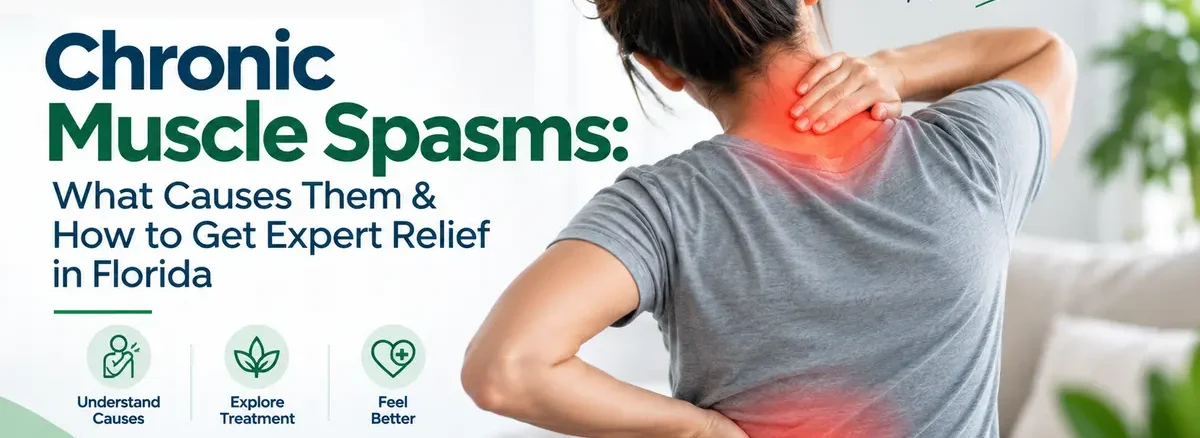
What Are Chronic Muscle Spasms?
Chronic muscle spasms are involuntary, sustained contractions of one or more muscles that recur over weeks or months without a single identifiable acute cause. Unlike a routine charley horse that resolves in minutes, persistent muscle cramps signal an underlying condition—whether mechanical, neurological, metabolic, or stress-related—that requires proper evaluation and care.
The medical community uses several terms interchangeably to describe this experience: recurring muscle spasms, persistent involuntary muscle contractions, muscle twitching, refractory muscle cramps, and chronic myofascial pain syndrome. While the vocabulary varies, the lived experience is the same—an unwanted, often painful tightening of muscle fibers that won’t fully release on its own.
Chronic muscle spasms differ from ordinary muscle fatigue or delayed onset muscle soreness (DOMS) in two key ways: they occur without provocation (at rest, during sleep, or with minimal movement), and they recur repeatedly in the same muscle groups—the lower back, neck, calves, hamstrings, or shoulders.
Quick Answer
Chronic muscle spasms are repeated involuntary muscle contractions or episodes of muscle tightening that occur frequently or persist over time. They may be related to muscle fatigue, dehydration, electrolyte changes, stress, medications, nerve problems, or other medical conditions. Frequent spasms that occur with weakness, numbness, severe pain, or coordination problems should be evaluated by a healthcare professional.
Signs & Symptoms: How to Recognize Recurring Muscle Spasms
Chronic or recurring muscle spasms present differently depending on the affected region and the underlying trigger. The following are the most consistently reported signs:
- Sudden, sharp tightening in a specific muscle group (back, neck, leg, shoulder, calf, hand, or forearm)
- Muscle twitching or visible rippling beneath the skin—a phenomenon called “fasciculations,” especially in the abdomen, thighs, or eyelids
- A hard, knotted area in the muscle that is tender to the touch (often called “trigger points” or “muscle knots”)
- Reduced range of motion after a spasm, coupled with muscle stiffness lasting hours or days
- Burning or aching pain radiating from the spasm site—common in cervical spasms and lumbar back spasms
- Nocturnal cramping—waking from sleep due to leg cramps at night, charley horses, or toe cramps
- Stomach twitching or quivering in the abdomen, particularly with dehydration or electrolyte imbalance
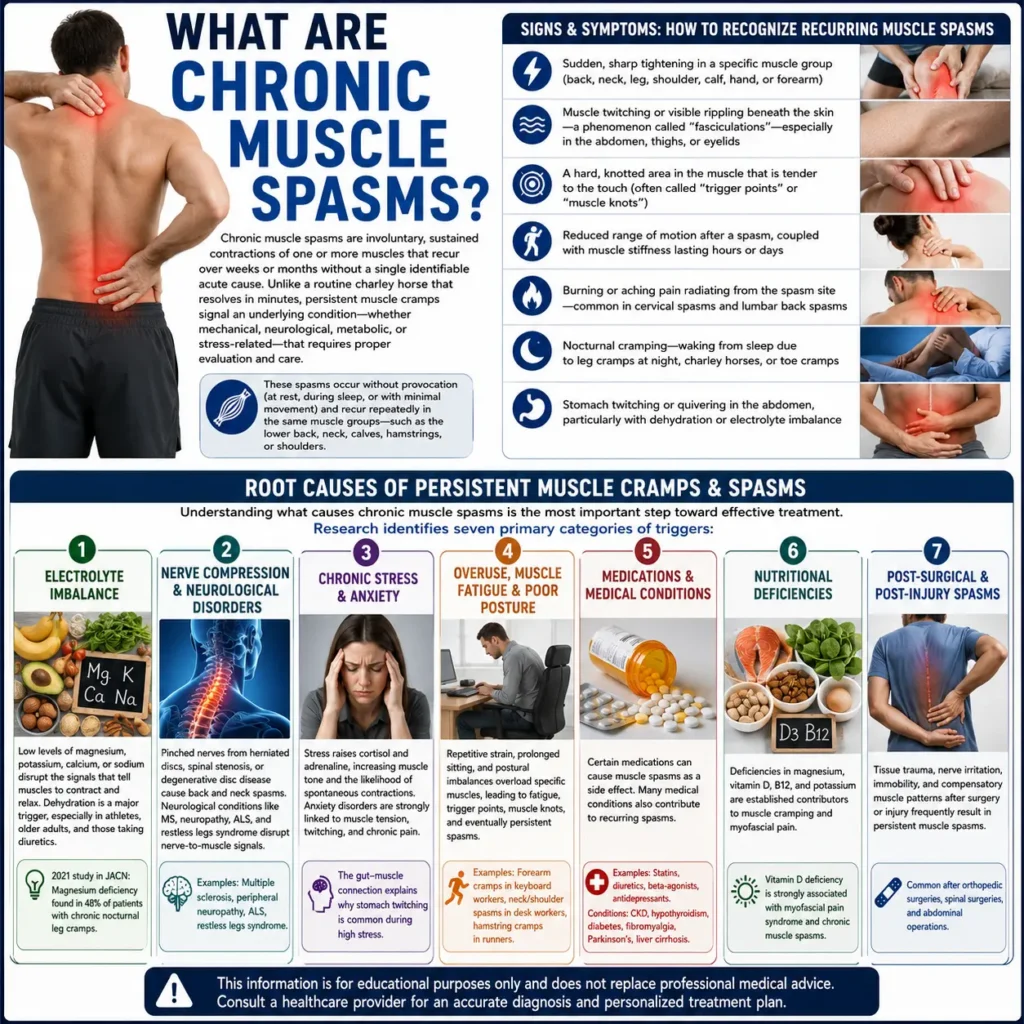
Why Do I Keep Getting Muscle Spasms?
If you keep getting muscle spasms, there may be an ongoing trigger affecting your muscles or nerves. Some people experience spasms after physical activity or muscle fatigue, while others notice them while sitting, resting, or sleeping.
Common contributors can include dehydration, electrolyte changes, prolonged inactivity, repetitive movements, poor posture, stress, medication effects, and nerve irritation. The location of the spasms may also provide useful information. For example, repeated spasms in the legs may have different contributing factors than recurring spasms in the neck, back, or hands.
For a more detailed explanation of why you keep getting muscle spasms, you can read our complete guide on recurring muscle spasms and their possible causes.
If muscle spasms happen frequently, continue for weeks, interfere with sleep or daily activities, or occur with symptoms such as weakness, numbness, tingling, or difficulty with coordination, speaking with a healthcare professional can help identify possible contributing factors.
Can Muscle Spasms Happen Without Exercise?
Yes. Muscle spasms can occur even when you have not recently exercised or performed strenuous physical activity. Although muscle fatigue and overuse are common triggers, spasms can also happen while sitting, resting, or sleeping.
Possible contributors include dehydration, prolonged sitting, poor posture, stress, electrolyte changes, medication effects, and nerve irritation. Spending long periods in one position may also contribute to muscle stiffness or tension, particularly in the neck, back, and legs.
Some people experience occasional muscle spasms without an obvious trigger. However, frequent or recurring spasms may be worth evaluating, especially if they interfere with sleep or daily activities or occur with symptoms such as weakness, numbness, tingling, severe pain, or changes in coordination.
Keeping track of when spasms occur, which muscles are affected, and any activities or symptoms that occur at the same time can help a healthcare professional identify possible contributing factors.
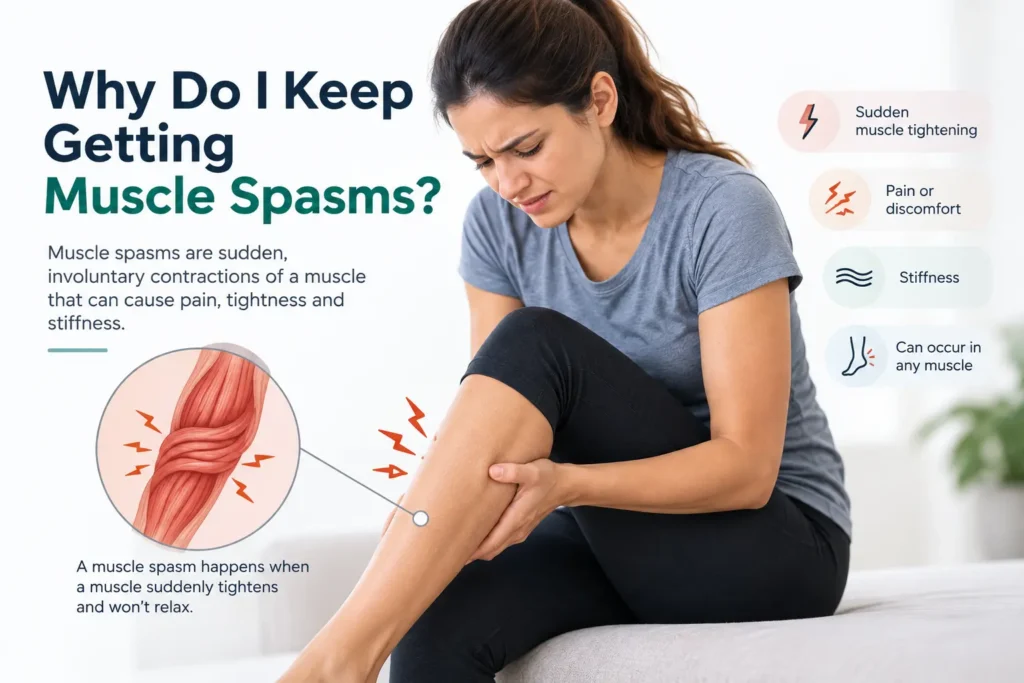
Root Causes of Persistent Muscle Cramps & Spasms
Understanding what causes chronic muscle spasms is the most important step toward effective treatment. Research identifies seven primary categories of triggers:
1. Electrolyte Imbalance
Low levels of magnesium, potassium, calcium, or sodium disrupt the electrochemical signals that tell muscles to contract and then relax. Dehydration, muscle twitching, and spasms triggered by twitching from dehydration are among the most common and most reversible causes. Athletes, elderly adults, and anyone taking diuretics (often prescribed for high blood pressure) are at elevated risk. A 2021 study in the Journal of the American College of Nutrition found that magnesium deficiency was present in 48% of patients with chronic nocturnal leg cramps.
2. Nerve Compression & Neurological Disorders
Pinched nerves—from herniated discs, spinal stenosis, or degenerative disc disease—are a leading cause of lower back spasms and cervical spasm causes. Systemic neurological conditions also drive chronic muscle spasms: multiple sclerosis (MS), peripheral neuropathy, amyotrophic lateral sclerosis (ALS), and restless legs syndrome all disrupt the normal nerve-to-muscle communication pathway, producing involuntary contractions that can affect the entire body.
3. Chronic Stress & Anxiety
Can chronic stress cause muscle spasms? Yes—and the evidence is clear. Psychological stress raises cortisol and adrenaline, which increase muscle tone and reduce the threshold for spontaneous contraction. Studies confirm that people with anxiety disorders report muscle tension, twitching, and chronic pain at significantly higher rates. Can anxiety cause muscle cramps? Absolutely—the gut-muscle connection also explains why stomach twitching is so common during periods of high stress.
4. Overuse, Muscle Fatigue & Poor Posture
Repetitive strain, prolonged sitting, and postural imbalances cause certain muscle groups to become chronically overloaded. This results in muscle fatigue, trigger points, muscle knots, and eventually persistent spasms. Common examples include forearm cramps in keyboard workers, neck and shoulder spasms in desk workers, and hamstring cramps in runners who under-stretch.
5. Medications & Medical Conditions
Several commonly prescribed drugs list muscle spasms as a side effect: statins (cholesterol medications), diuretics, beta-agonists for asthma, and certain antidepressants. Medical conditions associated with recurring spasms include chronic kidney disease, hypothyroidism, diabetes, fibromyalgia, Parkinson’s disease, and liver cirrhosis. Carpopedal spasm causes often include hyperventilation and hypocalcemia.
6. Nutritional Deficiencies
Beyond magnesium, deficiencies in vitamin D, B12, and potassium are established contributors to muscle cramping. Vitamin D deficiency is strongly associated with myofascial pain syndrome and chronic pain muscle spasms, particularly in populations with limited sun exposure.
7. Post-Surgical & Post-Injury Spasms
Muscle spasms after surgery are a recognized complication of orthopedic procedures, spinal surgeries, and abdominal operations. Post-surgical spasms stem from tissue trauma, nerve irritation, immobility, and the compensatory muscle patterns the body adopts during healing.
| Cause Category | Common Manifestations | Most Affected Areas |
|---|---|---|
| Electrolyte Imbalance / Dehydration | Nocturnal leg cramps, toe cramps, charley horses, and stomach twitching | Calves, feet, abdomen |
| Nerve Compression | Back spasms, cervical spasms, leg pain, sciatica | Lower back, neck, legs |
| Neurological Conditions | Whole-body muscle twitching, muscle weakness, restless legs | Full body, legs, arms |
| Chronic Stress / Anxiety | Neck muscle spasms, shoulder spasms, stomach twitching, jaw clenching | Neck, shoulders, jaw, abdomen |
| Overuse / Poor Posture | Forearm cramps, hamstring cramps, glute cramping, muscle knots | Forearms, hamstrings, glutes |
| Medications / Medical Conditions | Carpopedal spasm, finger cramps, leg cramps | Hands, feet, legs |
Why Do Muscle Spasms Happen at Night?
Muscle spasms and cramps can occur at night and may interrupt sleep. Nighttime muscle symptoms commonly affect the calves, feet, toes, and legs, although spasms can also occur in other parts of the body.
There is not always one clear reason why muscle spasms happen during sleep. Possible contributors can include muscle fatigue, prolonged sitting or inactivity during the day, dehydration, certain medications, and other factors that affect normal muscle and nerve function.
Some people notice that nighttime spasms occur after increased physical activity, while others experience them without an obvious connection to exercise. Sleeping position and prolonged positioning may also contribute to discomfort or muscle tension in certain areas.
Occasional nighttime spasms may not indicate a serious problem. However, frequent episodes that repeatedly interrupt sleep, become increasingly painful, or occur with weakness, numbness, tingling, or other neurological symptoms should be discussed with a healthcare professional.
Simple measures such as maintaining regular physical activity, gentle stretching when appropriate, and staying adequately hydrated may help some people. The best approach depends on the underlying cause of the muscle symptoms.
Muscle Spasm vs. Muscle Twitch vs. Muscle Cramp
Muscle spasms, muscle twitches, and muscle cramps can feel similar, but they do not always describe the same type of muscle symptom. Understanding the difference may help you describe your symptoms more clearly when speaking with a healthcare professional.
| Muscle Symptom | What It May Feel Like |
|---|---|
| Muscle Spasm | An involuntary tightening or contraction of a muscle that may cause discomfort, stiffness, or pain |
| Muscle Twitch | A small involuntary movement or fluttering sensation that may sometimes be visible under the skin |
| Muscle Cramp | A sudden and often painful tightening of a muscle that can make it difficult to move temporarily |
What Is a Muscle Spasm?
A muscle spasm generally involves an involuntary contraction or tightening of a muscle. Depending on the cause, the muscle may feel tight, painful, stiff, or difficult to relax. Spasms can occur in many areas of the body and may happen once or repeatedly.
What Is a Muscle Twitch?
A muscle twitch is often described as a brief fluttering or small involuntary movement. Some twitches are visible beneath the skin, while others are only felt as a brief sensation. Occasional twitching can occur for many reasons, including muscle fatigue or stress, but persistent or widespread twitching may need medical evaluation depending on accompanying symptoms.
What Is a Muscle Cramp?
A muscle cramp is typically a sudden and often painful contraction of a muscle. Cramps commonly affect the calves, feet, and legs and may occur during activity or while resting or sleeping.
Because these symptoms can overlap, it is helpful to pay attention to what the muscle feels like, how long the symptoms last, where they occur, and whether other symptoms are present.
Common Body Areas Affected by Chronic Muscle Spasms
Back Spasms & Lower Back Muscle Spasms
Back spasms—especially back spasms on the lower left side—are among the most disabling forms of chronic muscle spasms. Lumbar spasms often arise from disc pathology, poor core strength, or prolonged sitting. The muscle contracts involuntarily to protect an injured structure, creating a pain-spasm cycle that feeds itself. What does a muscle spasm feel like in the back? Most patients describe a sudden seizing sensation, sharp pain, and temporary inability to stand straight.
Neck & Cervical Spasms
Cervical spasms cause a range from whiplash and herniated cervical discs to stress, MS-related neck stiffness, and poor sleep position. Neck and shoulder spasms are often interconnected—the trapezius, levator scapulae, and sternocleidomastoid muscles form a functional unit that, when under chronic strain, produces radiating pain from the base of the skull down into the upper back. How long do muscle spasms last in the neck? Without treatment, cervical spasms can persist for days to weeks.
Leg Cramps & Hamstring Cramps
Leg cramps at night, charley horses, and cramps in the hamstring are the most searched forms of muscle cramp worldwide. Research from the Cleveland Clinic estimates that nearly 60% of adults experience nocturnal leg cramps regularly. Hamstring cramps and calf cramps are especially common in runners, cyclists, and people who sit for long periods, as tight hip flexors pull the pelvis forward, shortening the hamstrings.
Shoulder Muscle Spasms
Muscle spasms in the shoulder are among the top-searched conditions in this category, and for good reason: the shoulder is one of the most complex and overused joints in the body. Muscle spasms in the shoulders frequently result from rotator cuff strain, bursitis, postural overload, or referral pain from a cervical disc issue.
Abdominal & Stomach Twitching
Stomach twitching, abdominal muscle twitching, and lower-abdomen twitching are often benign and related to dehydration or stress. However, persistent twitching in the stomach area—especially twitching of the abdomen’s left side or twitching under the right rib cage—warrants evaluation to rule out gastrointestinal causes, hiatal hernia, or referred nerve irritation.
Hand, Finger & Forearm Cramps
Hand cramps, finger cramps, cramps in fingers and hands, forefinger twitching, and forearm cramps are increasingly common in the era of prolonged digital-device use. Writer’s cramp—a form of task-specific focal dystonia—sits on the severe end of this spectrum. Forearm muscle cramps in athletes often reflect electrolyte depletion during sustained effort.
Foot & Toe Cramps
Toe cramps, toe twitching, foot spasms, and causes for toe cramps commonly arise from dehydration, ill-fitting footwear, peripheral neuropathy, and mineral deficiencies. Charley horse cramps—the sudden, violent contraction of the entire calf—are the extreme version, often occurring at night during passive foot extension.
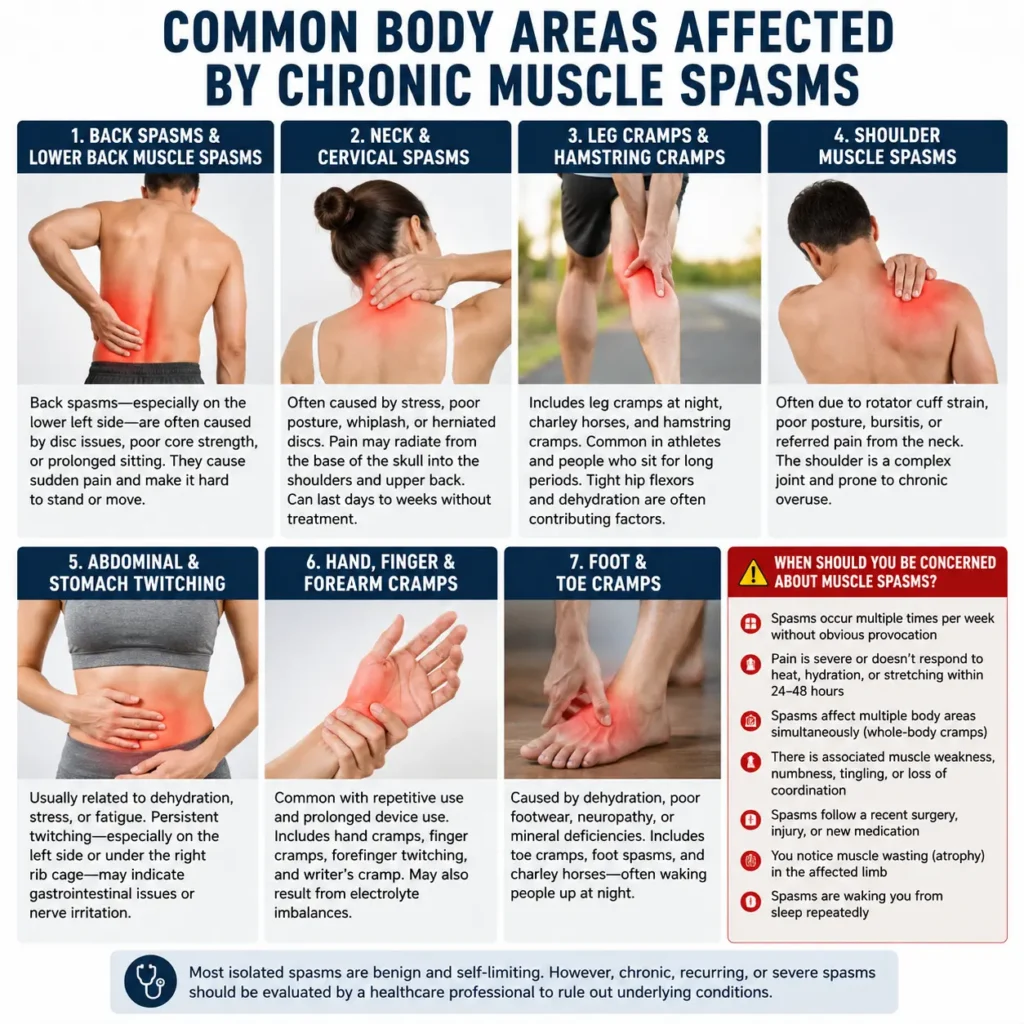
When Should You Be Concerned About Muscle Spasms?
Most isolated spasms are benign and self-limiting. However, chronic, recurring, or severe spasms deserve professional evaluation when any of the following apply:
- Spasms occur multiple times per week without obvious provocation
- Pain is severe or doesn’t respond to heat, hydration, or stretching within 24–48 hours
- Spasms affect multiple body areas simultaneously (whole-body muscle cramps throughout the body)
- There is associated muscle weakness, numbness, tingling, or loss of coordination
- Spasms follow a recent surgery, injury, or new medication
- You notice muscle wasting (atrophy) in the affected limb
- Spasms are waking you from sleep repeatedly
👨⚕️ Which Doctor to See
Start with your primary care physician (PCP). Depending on findings, you may be referred to a neurologist (for suspected MS, neuropathy, or ALS), a rheumatologist (for fibromyalgia or chronic pain muscle spasms), or a physiatrist/sports medicine specialist (for musculoskeletal causes). The ICD-10 code for chronic muscle spasms is M62.838 (muscle spasm, other site).
Treatments That Actually Work for Chronic Muscle Spasms
Treatment for chronic or persistent muscle spasms should always target the underlying cause while simultaneously providing symptomatic relief. Here is a structured overview of evidence-backed options:
Medical Treatments
Muscle relaxers—including cyclobenzaprine, baclofen, and methocarbamol—are commonly prescribed for acute flare-ups of back spasms, cervical spasms, and leg cramps. Note: Are muscle relaxers controlled substances? Most are not (Schedule IV or V or not scheduled at all), but they carry sedation risks and are generally recommended for short-term use only. Many patients ask, “Do muscle relaxers make you sleepy?” The answer is yes for most agents in this class.
Botulinum toxin (Botox) injections are FDA-approved for cervical dystonia and spasticity from MS or stroke and are increasingly used for refractory back spasms and myofascial pain syndrome when other treatments have failed.
Physical therapy is the gold standard for mechanical causes of muscle spasms. A PT-guided program addresses muscle weakness, postural imbalance, trigger points, and movement dysfunction—all of which sustain the spasm cycle. Research consistently shows physical therapy outperforms medication alone for chronic back pain and chronic neck spasms.
Targeted Manual Therapies
Massage for muscle spasms—including deep tissue, Swedish, and myofascial release—is one of the highest-searched and most effective non-pharmacological interventions. Massage and muscle spasm research confirms that manual therapy reduces muscle tone, improves local circulation, and decreases pain. A 2023 Cochrane review found moderate-quality evidence supporting massage therapy for chronic low back pain and neck spasms.
Acupuncture for muscle spasms has a strong evidence base for both neck spasms and low back muscle spasms. A 2022 meta-analysis in Pain Medicine concluded that acupuncture produced clinically meaningful reductions in both spasm frequency and intensity compared to sham treatment.
Chiropractic manipulation is commonly used for spinal muscle spasms, particularly cervical and lumbar. While evidence is mixed, it may provide short-term relief for patients with mechanically driven spasms.
Supplement & Nutritional Therapy
Supplements to prevent muscle cramps with the best evidence include:
- Magnesium glycinate or citrate—most effective for nocturnal leg cramps, toe cramps, and whole-body spasms related to electrolyte imbalance
- Potassium—particularly valuable for leg cramps at night and charley horses in athletes
- Vitamin D3 + K2—addresses deficiency-related myofascial pain and muscle weakness
- Vitamin B12—important for nerve health; deficiency causes peripheral neuropathy and associated muscle twitching
- Taurine & B6—emerging evidence for reducing forearm cramps and hamstring cramps in endurance athletes
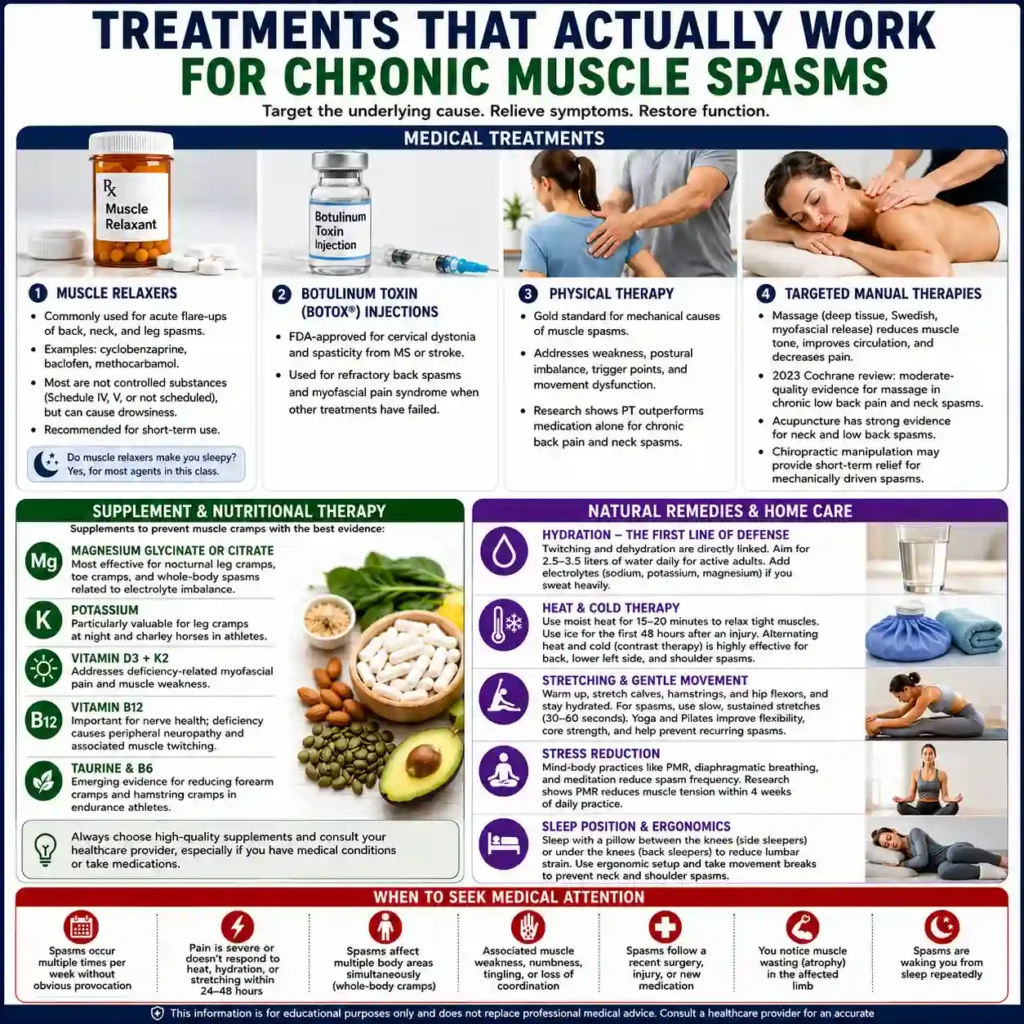
Natural Remedies & Home Care for Muscle Spasms
For many patients, lifestyle modifications and home remedies are sufficient to manage mild-to-moderate chronic muscle spasms—particularly those driven by dehydration, electrolyte imbalance, stress, or postural overload.
Hydration—The First Line of Defense
Twitching and dehydration are directly linked. The majority of cases of stomach twitching, leg cramps at night, and forearm cramps improve significantly with consistent hydration. Aim for a minimum of 2.5–3.5 liters of water daily for active adults. Add electrolytes (sodium, potassium, and magnesium) if you sweat heavily.
Heat & Cold Therapy
Apply moist heat (a warm compress, heating pad, or warm bath) to the spasming muscle for 15–20 minutes to increase blood flow and reduce muscle tension. Use ice packs for the first 48 hours after an acute injury-related spasm to reduce inflammation. Alternating heat and cold (contrast therapy) can be highly effective for back spasms, lower left side, and shoulder muscle spasms.
Stretching & Gentle Movement
How to not get cramps when running: Warm up properly, stretch the calves, hamstrings, and hip flexors, and maintain consistent hydration. For existing spasms, slow, sustained stretching—held for 30–60 seconds—is more effective than ballistic (bouncing) stretches. Yoga and Pilates are excellent long-term tools for reducing recurring muscle spasms by improving flexibility, core strength, and body awareness.
Stress Reduction
Since chronic stress is a major driver of neck spasms, shoulder spasms, and jaw clenching, mind-body practices—including progressive muscle relaxation (PMR), diaphragmatic breathing, and meditation—directly reduce spasm frequency. Research from the Cleveland Clinic confirms that PMR reduces muscle tension measurably within 4 weeks of daily practice.
Sleep Position & Ergonomics
Nocturnal leg cramps and morning back spasms are often worsened by poor sleep posture. Sleeping with a pillow between the knees (side sleepers) or under the knees (back sleepers) reduces lumbar strain. An ergonomic desk setup and regular movement breaks reduce the accumulation of muscle tension that leads to chronic neck and shoulder spasms during waking hours.
How to Prevent Chronic Muscle Spasms Long-Term
Preventing recurring muscle spasms means addressing risk factors before the spasm-pain cycle becomes entrenched. The most effective long-term strategy combines four pillars:
- Consistent hydration and electrolyte balance—the single most impactful daily habit for preventing leg cramps, toe cramps, and muscle twitching.
- Progressive strength training—building balanced muscle strength around the spine, shoulders, hips, and calves—eliminates the postural weaknesses that fuel back spasms, hamstring cramps, and shoulder muscle spasms.
- Daily mobility work—10–15 minutes of dynamic and static stretching each day reduces accumulating muscle tension, particularly in the neck, lower back, and hamstrings.
- Sleep quality & stress management—cortisol dysregulation from poor sleep and chronic stress increases baseline muscle tone and lowers the threshold for spontaneous contractions.
For athletes specifically, how to reduce cramps when running comes down to race-pace hydration, pre-race sodium loading, consistent training (not sudden volume spikes), and post-run stretching of the calves, hamstrings, and hip flexors. Supplements to prevent muscle cramps—particularly magnesium and potassium—should be incorporated into the daily routine, not just taken reactively.
Can chronic muscle spasms be cured? In the majority of cases where a specific, treatable cause is identified—yes. Even in complex conditions like fibromyalgia, MS, or chronic pain syndromes, a multimodal treatment plan combining physical therapy, pharmacological support, and lifestyle modification can substantially reduce spasm frequency and severity, significantly improving quality of life.
Chronic Muscle Spasm Evaluation and Care in Florida
Recurring muscle spasms can affect comfort, sleep, mobility, work, and other daily activities. When spasms continue to occur or become more difficult to manage, identifying possible contributing factors can be an important step toward appropriate care.
An evaluation may include discussing when the spasms started, how often they occur, which muscles are affected, current medications, activity levels, and whether symptoms such as pain, weakness, numbness, or tingling are also present. Depending on the symptoms and possible cause, further evaluation or referral may be recommended.
For individuals experiencing recurring muscle spasms in Florida, seeking professional care may be particularly important when symptoms are persistent, severe, repeatedly interrupt sleep, or affect normal movement and daily activities.
The most appropriate approach depends on the individual and the possible underlying cause. A healthcare professional can help determine the next steps based on the person’s symptoms and overall health needs.
Why Venice Care Delivers Better, Long-Term Healthcare Results
Venice Care stands out by delivering root-cause, condition-focused healthcare instead of temporary symptom relief. Unlike generic clinics, it uses a structured, evidence-based approach to diagnose and treat complex conditions such as chronic muscle spasms, neurological disorders, and musculoskeletal pain. Every treatment plan is personalized, combining medical therapy, physical rehabilitation, nutritional correction, and lifestyle optimization to ensure long-term recovery. This integrated model improves accuracy, speeds up healing, and reduces recurrence—making Venice Care a trusted choice for patients seeking effective, long-lasting results.
What makes Venice Care better is its focus on precision, prevention, and patient education. The care model prioritizes identifying underlying triggers such as electrolyte imbalances, nerve compression, or chronic stress and then correcting them with targeted therapies and practical, real-world solutions. Patients receive clear guidance, transparent treatment plans, and actionable steps to maintain results beyond the clinic. With a focus on prevention, performance, and sustainable health outcomes, Venice Care is a leading provider of advanced, patient-centered healthcare solutions.
Frequently Asked Questions
What causes chronic muscle spasms?
The possible cause may depend on where the spasms occur, how frequently they happen, and whether other symptoms are present. Frequent spasms that occur with weakness, numbness, severe pain, or coordination problems should be evaluated by a healthcare professional.
Can chronic muscle spasms be cured?
The outlook for chronic muscle spasms depends on the underlying cause. In some cases, spasms may improve when contributing factors such as muscle overuse, dehydration, medication effects, or another underlying condition are identified and addressed.
Treatment may focus on relieving symptoms, improving muscle function, and managing the underlying cause. Depending on the individual situation, a healthcare professional may recommend approaches such as stretching, physical therapy, hydration, or other treatments.
When should I be concerned about muscle spasms?
Consider speaking with a healthcare professional if muscle spasms happen frequently, become severe, persist for a long time, affect multiple areas of the body, or repeatedly interfere with sleep and daily activities.
Medical evaluation is also important when spasms occur with symptoms such as muscle weakness, numbness, tingling, difficulty with coordination, or significant pain. New or worsening symptoms following an injury or medication change should also be discussed with a healthcare professional.
Which doctor should I consult for frequent muscle spasms?
A primary care healthcare professional is often a good starting point for frequent muscle spasms. They can review your symptoms, medical history, medications, and possible contributing factors.
Depending on the suspected cause, further evaluation or referral to a specialist such as a neurologist, physiatrist, orthopedic specialist, or another appropriate healthcare professional may be recommended.
How long do muscle spasms last in the neck or back?
The duration of muscle spasms can vary depending on the cause and the affected area. Individual spasms may last seconds or minutes, while muscle tightness, discomfort, or recurring spasms may continue for a longer period.
Neck or back muscle spasms that continue to recur, cause significant pain, or interfere with movement and daily activities should be evaluated to help identify possible contributing factors.
Can dehydration cause twitching muscles?
Dehydration can contribute to muscle cramps or spasms, particularly during physical activity or exposure to heat. Changes in fluid and electrolyte balance may affect normal muscle function.
However, muscle twitching and spasms can have many possible causes. Frequent or persistent symptoms should not automatically be attributed to dehydration, especially when other symptoms are present.
What are natural remedies for muscle spasms?
Some people may find symptom relief through gentle stretching, appropriate physical activity, hydration, rest, or other self-care measures depending on the cause of the muscle symptoms.
However, natural approaches may not be appropriate for every cause of recurring muscle spasms. Before using supplements or other treatments regularly, consider discussing persistent symptoms with a healthcare professional to identify possible underlying causes.
Can Muscle Spasms Happen While Resting?
Yes. Muscle spasms can happen while sitting, resting, or lying down. Possible contributors include prolonged positioning, muscle tension, dehydration, medication effects, nerve irritation, and other factors.
Frequent spasms that occur without an obvious trigger or happen with weakness, numbness, or other symptoms should be evaluated by a healthcare professional.
Can Muscle Spasms Wake You Up at Night?
Yes. Muscle spasms or cramps can occur during sleep and may wake a person because of sudden muscle tightening or pain. Nighttime symptoms commonly affect the legs, calves, feet, or toes, although other areas may also be affected.
Frequent nighttime spasms that repeatedly disrupt sleep should be discussed with a healthcare professional.
Can Poor Posture Cause Muscle Spasms?
Poor posture and prolonged positioning may contribute to muscle tension and fatigue in some people. This can affect areas such as the neck, shoulders, and back.
However, recurring muscle spasms can have several possible causes, so persistent symptoms should not automatically be attributed to posture alone.
Can Muscle Spasms Affect Multiple Areas of the Body?
Yes. Muscle spasms can affect one muscle or occur in multiple areas of the body. The location, frequency, and pattern of symptoms may provide useful information about possible contributing factors.
Widespread or recurring spasms, particularly when accompanied by weakness, numbness, or coordination problems, should be evaluated by a healthcare professional.
Why Do Muscle Spasms Happen Without Exercise?
Muscle spasms can occur even without recent exercise or strenuous physical activity. Possible contributors include prolonged sitting, stress, dehydration, electrolyte changes, medication effects, poor posture, and nerve irritation.
Occasional spasms may happen without an obvious cause, but recurring symptoms may need further evaluation.