
What Is a Seizure?
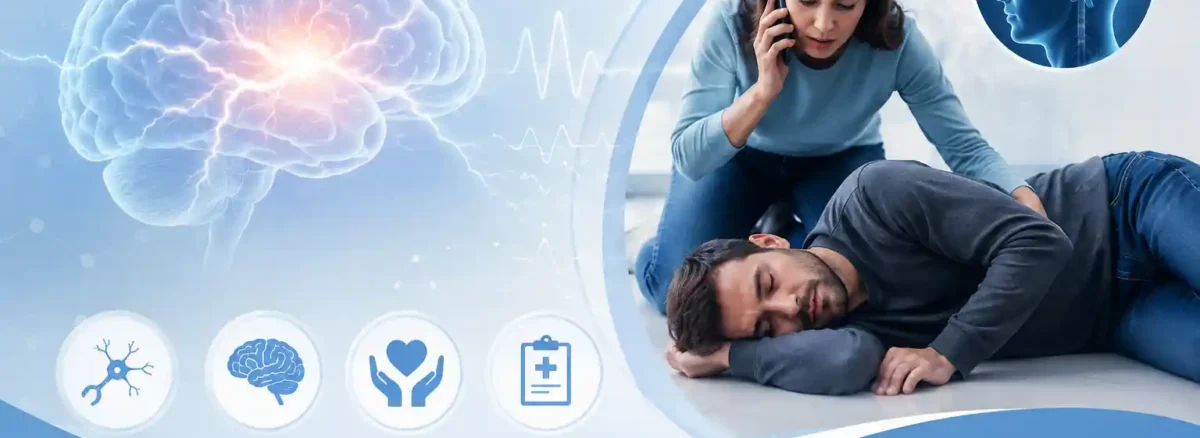
A seizure is a sudden, uncontrolled surge of electrical activity in the brain. It disrupts the way nerve cells (neurons) communicate, leading to temporary changes in awareness, behavior, movements, or sensations. Seizures are a symptom of a brain issue, not a disease itself.
Not all seizures look the same — you might scare off into space for a few seconds, jerk an arm, or feel muscles twitch. You might only have one seizure in your life or experience multiple per day.

What Happens During a Seizure?
Normally, brain cells communicate using organized electrical signals. During a seizure, these signals become abnormal and excessive, producing different symptoms depending on which part of the brain is affected.
When a Seizure Begins
A seizure occurs when this normal electrical rhythm is suddenly disrupted. A group of neurons starts firing abnormally — too fast, too intensely, and without control. This chaotic electrical activity spreads through parts of the brain and temporarily overrides normal brain function.
Think of it like a sudden electrical storm inside the brain — unpredictable, powerful, and disruptive.
The 3 Stages of a Seizure
Stage 1: Aura (Pre-Ictal Phase) — Before the Seizure
Not everyone experiences this stage, but some people notice warning signs seconds or minutes before a seizure:
. Sudden strange smell, taste, or sound
. Feeling of déjà vu or unreality
. Tingling or numbness
. Sudden anxiety, fear, or unexplained emotion
. Visual disturbances like flashing lights
. Nausea or dizziness
This aura is actually the very beginning of the seizure — the electrical disturbance has already started in a small brain area.
Stage 2: Ictal Phase — During the Seizure
This is the active seizure itself. What happens depends on which part of the brain is affected:
| Brain Area Affected | What You See or Feel |
| Motor cortex | Jerking, stiffening, or twitching of limbs |
| Frontal lobe | Repetitive movements, confusion, staring |
| Temporal lobe | Strange emotions, memory flashbacks, lip smacking |
| Occipital lobe | Visual hallucinations, flashing lights |
| Whole brain | Full loss of consciousness, convulsions |
. Body stiffens or muscles jerk rhythmically
. Loss of awareness or consciousness
. Staring blankly into space
. Repetitive automatic movements (chewing, hand rubbing)
This phase typically lasts 30 seconds to 2 minutes.
Stage 3: Post-Ictal Phase — After the Seizure
Once the abnormal electrical activity stops, the brain needs time to recover. This recovery period is called the post-ictal phase and can last from a few minutes to several hours.
During this phase, a person may experience:
. Confusion — not knowing where they are or what happened
. Extreme fatigue — feeling deeply exhausted
. Headache — often described as throbbing or dull
. Memory loss — no recollection of the seizure
. Nausea — feeling sick or dizzy
Types of Seizures
1. Focal (Partial) Seizures
These start in one specific area of the brain.
| Type | Description |
| Focal Aware (Simple Partial) | Person stays conscious; may have muscle twitching, sensory changes, or emotions |
| Focal Impaired Awareness (Complex Partial) | Consciousness is affected; person may stare blankly or perform repetitive movements |
| Focal to Bilateral Tonic-Clonic | Starts in one area, then spreads to both sides of the brain |
2. Generalized Seizures
These involve both hemispheres of the brain from the start.
| Type | Description |
| Tonic-Clonic (Grand Mal) | Stiffening followed by rhythmic jerking; loss of consciousness |
| Absence (Petit Mal) | Brief staring spells, 5–30 seconds; common in children |
| Tonic | Sudden muscle stiffening, often causing falls |
| Clonic | Rhythmic, jerking muscle movements |
| Myoclonic | Brief, shock-like muscle jerks, usually in the arms |
| Atonic (Drop Attacks) | Sudden loss of muscle tone, causing collapse |
Symptoms & Causes
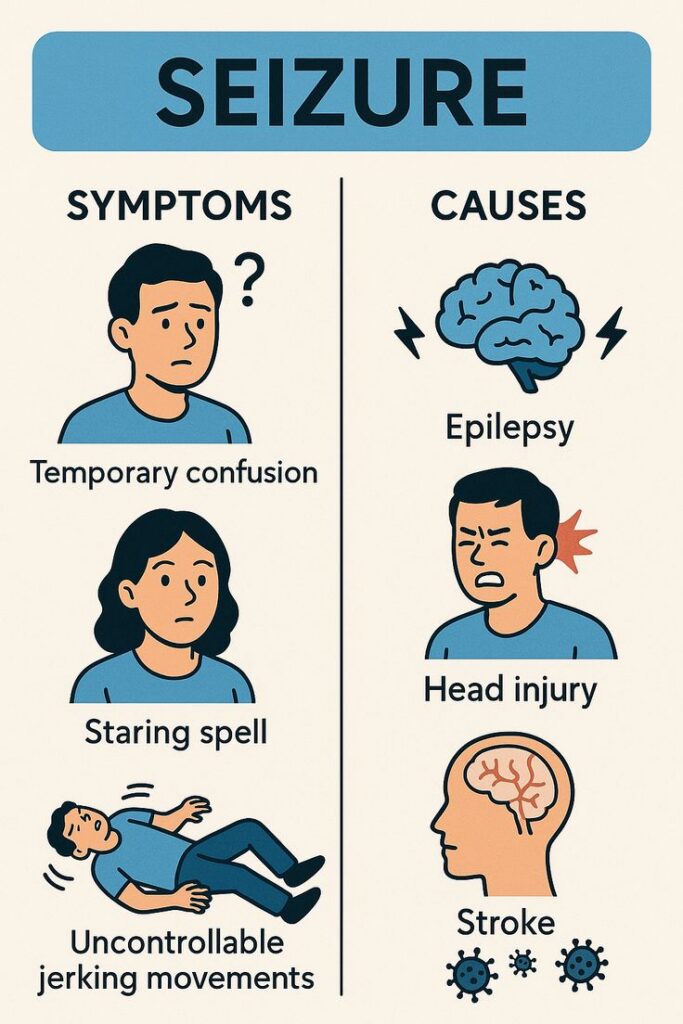
Symptoms
. Shaking or jerking movements
. Staring blankly
. Loss of consciousness
. Confusion or memory loss
. Strange sensations like tingling or unusual smells
Causes
. Epilepsy
. Head injury
. High fever
. Low blood sugar
. Brain infection or stroke
. Lack of sleep, stress, or alcohol/drug withdrawal
Warning Signs (Aura)
Some people experience warning signs called an “aura” seconds or minutes before a seizure begins:
. Sudden confusion or dizziness
. Unusual smells, tastes, or sounds
. Blurred vision or flashing lights
. Tingling or numbness in the body
. Feeling anxious or fearful without reason
. Headache or nausea
. Sudden weakness or loss of balance
Not everyone experiences an aura, and symptoms vary by seizure type.
Observable Signs of a Seizure
| Body Area | Signs Observed |
| Eyes | Blank staring, eye rolling upward, rapid blinking, eyes deviated to one side |
| Face | Facial twitching, lip smacking, chewing motions, drooling, pallor or flushing |
| Mouth | Teeth clenching, tongue biting, frothing at mouth, crying out |
| Arms & Hands | Jerking, stiffening, repetitive hand rubbing or picking movements |
| Legs | Stiffening, rhythmic kicking, sudden limpness |
| Body | Arching of back, falling suddenly, repetitive rocking motions |
What To Do When You See a Seizure
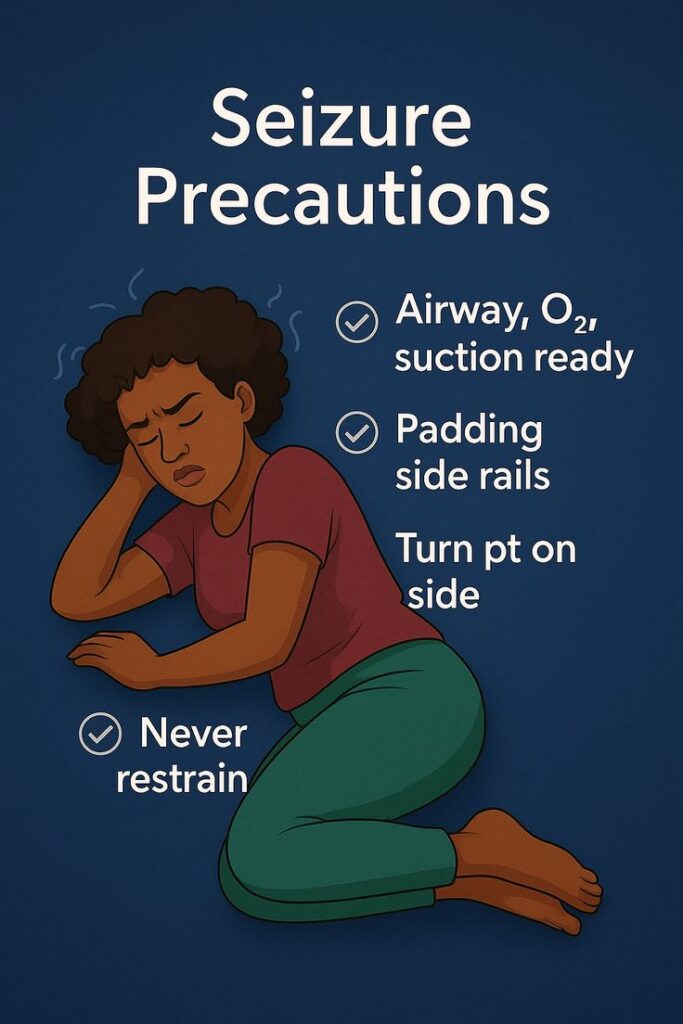
DO:
. Stay calm and stay with the person
. Time the seizure duration
. Gently cushion their head
. Turn them on their side (recovery position)
. Clear the area of hard or sharp objects
. Loosen tight clothing around the neck
DO NOT:
. Hold them down or restrain movements
. Put anything in their mouth
. Give water or food until fully conscious
. Leave them alone
Call Emergency Services If:
. The seizure lasts more than 5 minutes
. Another seizure starts soon after the first
. The person has trouble breathing
. The person gets injured during the seizure
. The seizure happens in water
How Doctors Diagnose Seizures
Doctors diagnose seizures through a combination of:
. Medical history review of symptoms and seizure episode details
. Neurological examination to check brain and nervous system function
. EEG (Electroencephalogram) to measure electrical brain activity
. MRI or CT scan to identify any brain abnormalities
. Blood tests to check for infections, low blood sugar, or other conditions
Treatment Options
Treatment depends on the type, cause, and severity of seizures:
. Anti-seizure medications — the first line of treatment for most patients
. Brain surgery — when seizures originate in one specific, operable brain area
. Vagus Nerve Stimulation (VNS) — a device that sends electrical impulses to the brain
. Deep Brain Stimulation — for drug-resistant cases
. Responsive Neurostimulation Devices — detect and respond to seizure activity
. Ketogenic Diet — high-fat, low-carb diet effective especially in children with drug-resistant seizures
Lifestyle Tips for Managing Seizures
. Take medications exactly as prescribed
. Get enough sleep every night
. Manage stress through relaxation or exercise
. Avoid alcohol and recreational drugs
. Identify and avoid personal seizure triggers
. Eat a healthy, balanced diet and stay hydrated
. Exercise regularly and safely
. Keep a seizure diary to track symptoms and triggers
. Attend regular doctor check-ups
When to See a Specialist
. Consult a neurologist or epilepsy specialist if:
. You experience a seizure for the first time
. Seizures happen repeatedly or become more severe
. A seizure lasts longer than 5 minutes
. Breathing problems, injuries, or unconsciousness occur after a seizure
. Medications are not controlling symptoms effectively
. Seizures interfere with work, sleep, school, or daily activities
You notice memory loss, confusion, or unusual behavior after seizures
Frequently Asked Questions (FAQs)
1. What Is a Seizure?
A seizure is a sudden and uncontrolled burst of electrical activity in the brain. It can affect a person’s movements, behavior, emotions, awareness, or consciousness for a short period of time.
2. What Are the Common Symptoms of a Seizure?
. Seizure symptoms may vary from person to person, but common signs include:
. Uncontrolled shaking or jerking movements
. Staring spells
. Sudden confusion
. Loss of consciousness
. Temporary memory loss
. Unusual sensations or body movements
3. What Causes Seizures?
. Seizures can happen due to several medical conditions or triggers, including:
. Epilepsy
. Head injuries
. Brain infections
. High fever
. Stroke
. Brain tumors
. Lack of sleep
. Low blood sugar or other neurological conditions
4. Are All Seizures Dangerous?
Not all seizures are life-threatening, but some may require immediate medical attention. Emergency care is recommended if:
. A seizure lasts longer than 5 minutes
. Multiple seizures happen close together
. The person has difficulty breathing afterward
. An injury occurs during the seizure
5. How Are Seizures Diagnosed?
Doctors use different tests and evaluations to diagnose seizures, such as:
. Neurological examinations
. EEG (Electroencephalogram) tests
. MRI or CT scans
. Blood tests
. Medical history review
6. Can Seizures Be Treated?
Yes, seizures can often be managed successfully with proper treatment. Depending on the cause and severity, treatment options may include:
. Anti-seizure medications
. Lifestyle and sleep management
. Dietary therapy
. Surgery or advanced neurological treatments
Regular monitoring by a healthcare specialist