
- January 29, 2026
- Singh Kuldeep
- Comment: 0
- Uncategorized
Introduction – What Is HIV?
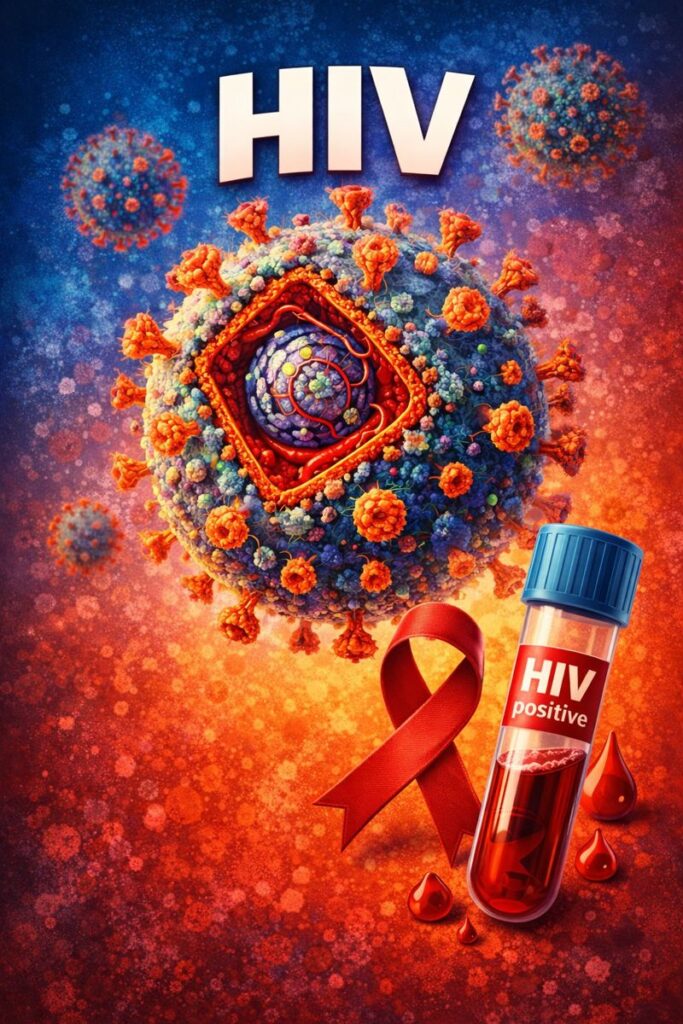
HIV (human immunodeficiency virus) is a virus that attacks the body’s immune system, mainly CD4 (T) cells that help fight infections. If it is not treated, HIV can weaken the immune system over time and may lead to AIDS (acquired immunodeficiency syndrome). Although there is no complete cure, proper medical care and treatment can control the virus and help people live a long, healthy life. HIV spreads through specific body fluids such as blood, semen, vaginal fluids, rectal fluids, and breast milk, and it is most commonly transmitted through unprotected sex, sharing needles, or from mother to baby during pregnancy, birth, or breastfeeding without medical care. It does not spread through casual contact like hugging, shaking hands, sharing food, or using the same toilet. Understanding HIV is important because early awareness, testing, and treatment can prevent the infection from progressing and also reduce the risk of spreading it to others.

HIV Meaning Explained
Human immunodeficiency virus (HIV) is a virus that attacks the body’s immune system, mainly the CD4 (T) cells (a type of white blood cell) that help protect the body from infections. Over time, HIV reduces the number of these cells, making the immune system weaker and the person more vulnerable to infections and diseases. If left untreated, HIV can progress to AIDS (acquired immunodeficiency syndrome), which is the most advanced stage of HIV infection. In the early stages, many people may not feel sick, but the virus can still be active in the body and can be passed to others through certain body fluids, most commonly through unprotected sex or sharing injection drug equipment.
What Causes HIV?
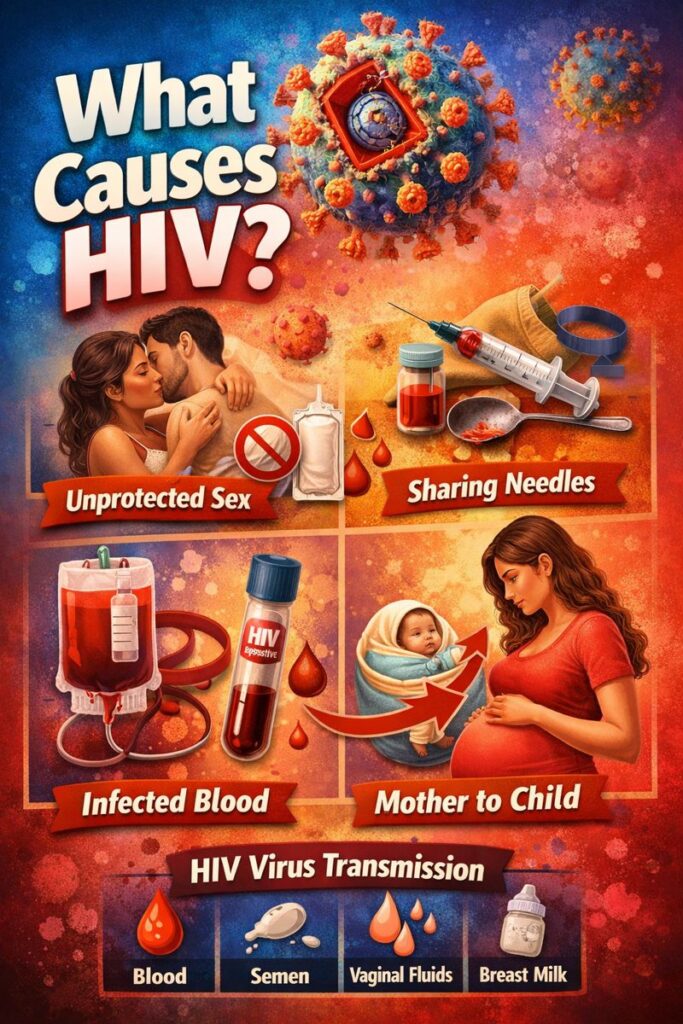
HIV is caused by the Human Immunodeficiency Virus, which enters the body and attacks the immune system by destroying white blood cells called CD4 (T) cells. It spreads when infected body fluids—such as blood, semen, vaginal fluids, rectal fluids, or breast milk—enter another person’s bloodstream or come into contact with mucous membranes. This can happen through unprotected vaginal, anal, or oral sex, sharing needles or syringes, contact with infected blood, or from a mother to her baby during pregnancy, childbirth, or breastfeeding without proper treatment. HIV does not spread through casual daily contact like hugging, shaking hands, sharing food, coughing, sneezing, or using the same toilet, and the risk can be reduced with safe sex practices, clean needle use, regular testing, and medical prevention methods.
Early Symptoms of HIV
Early symptoms of HIV usually appear 2 to 4 weeks after infection and often feel like a common flu, though some people may have no symptoms at all. These signs happen as the body reacts to the virus for the first time, and symptoms can be mild to severe, lasting from a few days to a few weeks. Common early symptoms include fever and chills, extreme fatigue, headache, sore throat, swollen lymph nodes (neck, armpits, or groin), skin rash, muscle or joint aches, mouth ulcers, night sweats, and sometimes weight loss. Because these symptoms are similar to many other illnesses, the only definite way to confirm HIV is through an HIV test. If you think you may have been exposed, getting tested early is important, as early treatment helps people live long, healthy lives and reduces the risk of passing HIV to others.
Sexual Contact
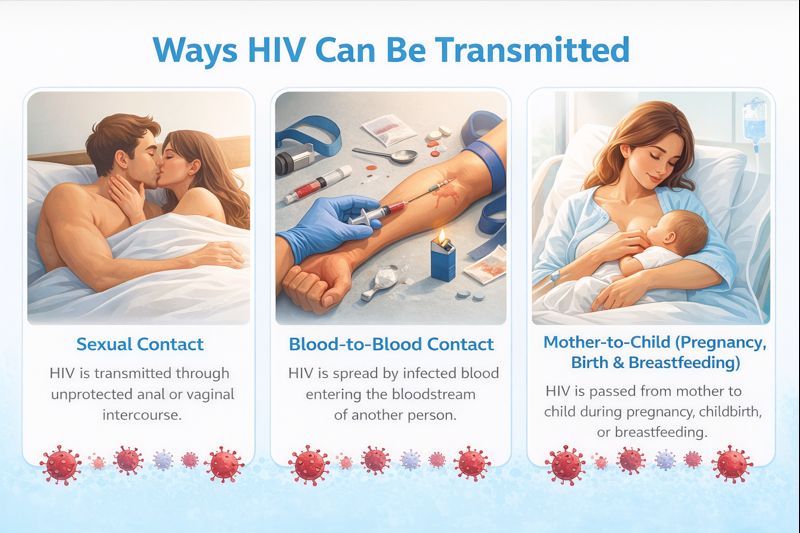
HIV is transmitted during sexual contact through the exchange of specific bodily fluids—semen, pre-seminal fluid, vaginal fluids, rectal fluids, and blood—from an HIV-positive person with a detectable viral load. The primary routes are unprotected anal or vaginal intercourse, with anal sex posing the highest risk.
Blood-to-Blood Contact
HIV can spread when infected blood enters another person’s bloodstream through shared needles, syringes, or equipment used for drug use, tattooing, or piercing. Additional risks include needle-stick injuries in healthcare settings, contaminated blood transfusions, and direct contact with open wounds during accidents.
Mother-to-Child (Pregnancy, Birth & Breastfeeding)
HIV can pass from mother to child during pregnancy, labor, delivery, or breastfeeding, known as perinatal transmission. Without treatment, risk ranges from 15 to 45 percent. With antiretroviral therapy and undetectable viral load, transmission drops below 1 percent through blood, vaginal fluids, or breast milk.
HIV vs. AIDS – What’s the Difference?
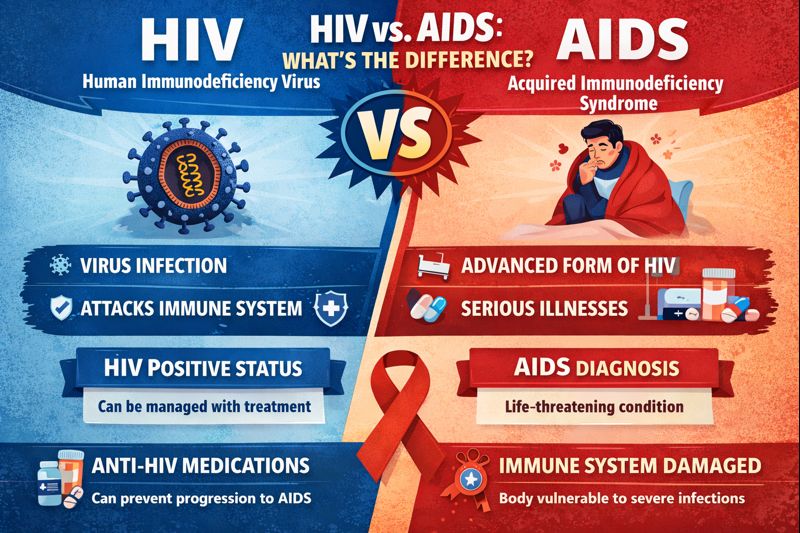
HIV (Human Immunodeficiency Virus) is a virus that attacks the immune system, mainly CD4 (T) cells, which help the body fight infections. HIV belongs to a group of viruses called retroviruses, and once it infects a cell, that cell remains infected for life. If left untreated, HIV can gradually weaken the immune system over several years.
AIDS (Acquired Immunodeficiency Syndrome) is the most advanced stage of HIV infection. It occurs when the immune system is severely damaged, making the body unable to fight off infections and diseases. People with AIDS may develop opportunistic infections or certain cancers that do not usually affect individuals with a healthy immune system. Not everyone with HIV develops AIDS, especially with modern antiretroviral therapy (ART), which can prevent HIV from progressing and help people live long, healthy lives.
HIV and AIDS are related but not the same: HIV is the virus, and AIDS is a condition that can develop if HIV is untreated and the immune system becomes severely damaged. Early testing, diagnosis, and treatment are essential to stay healthy and prevent complications. There is no test for AIDS itself, as it is defined by the presence of illnesses caused by untreated HIV.
How To Get Tested For HIV
HIV testing is confidential, often free, and widely available at doctor’s offices, clinics, community health centers, and through mail-in or pharmacy self-tests. Testing is recommended for everyone aged 13–64 at least once.
Most HIV tests use a blood sample, either from a blood draw or fingerstick, while some use saliva, though blood tests are more accurate. Tests typically look for HIV antibodies—proteins the body produces to fight the virus—though some tests can detect the virus itself. Rapid tests can provide results in 15–30 minutes, while lab-based tests may take a day or two.
It’s important to consider the window period, which is the time between exposure and when a test can reliably detect HIV. If a recent exposure occurred, a doctor may recommend repeat testing after a few weeks.
HIV testing is simple, safe, and one of the best ways to protect your health. Many testing sites offer confidential or anonymous services. If a test result is positive, healthcare providers will guide confirmatory testing and start antiretroviral therapy (ART) to help manage the virus, maintain health, and reduce the risk of transmission.
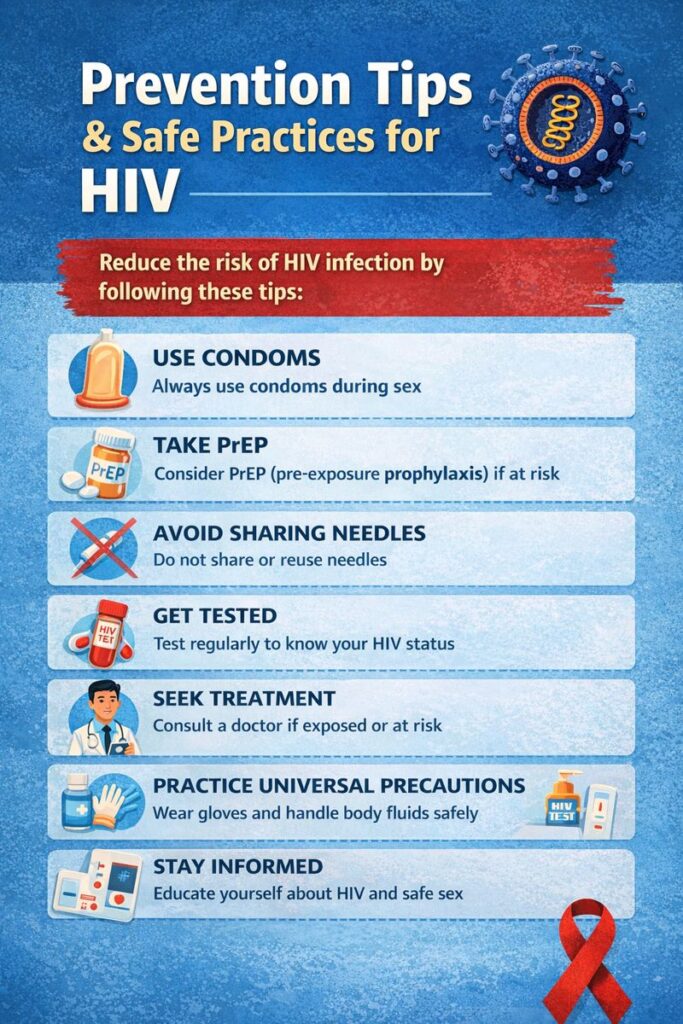
Prevention Tips & Safe Practices
Preventing HIV involves awareness, safe practices, and medical prevention. Key steps include using condoms correctly during vaginal or anal sex, limiting the number of sexual partners, and having open communication about sexual health. Avoiding sharing needles or syringes for injections, drug use, tattoos, or piercings is also crucial; always use new, sterile, and properly disposed equipment.
Regular HIV testing helps with early detection, protecting both yourself and others. For people at higher risk, PrEP (Pre-Exposure Prophylaxis) provides strong protection when taken daily, while PEP (Post-Exposure Prophylaxis) should be started within 72 hours after possible exposure to reduce infection risk. Pregnant women living with HIV can prevent transmission to their baby by taking proper treatment during pregnancy and delivery.

Conclusion – Know the Facts, Stay Safe
HIV is a virus that attacks the immune system, and if left untreated, it can progress to AIDS, the most advanced stage of infection. Understanding how HIV spreads, recognizing early symptoms, getting tested regularly, and knowing the difference between HIV and AIDS are essential for protecting your health.
Prevention is key: practice safe sex, avoid sharing needles, use medical prevention methods like PrEP and PEP when appropriate, and ensure proper treatment during pregnancy to protect both mother and child. Early testing, prompt treatment with antiretroviral therapy (ART), and regular medical care allow people living with HIV to lead long, healthy lives and reduce the risk of transmission.
Being informed, staying vigilant, and following safe practices empower you to protect yourself and others. Know the facts, take preventive measures, and get tested regularly—staying safe starts with awareness and action.
Contact us
Compassionate Cannabis Clinic
- 425 Commercial Court, Suite B, Venice, FL 34292
- (941)586-2426
- info@venicecare.com