
If you’ve been asking “why do I keep getting muscle spasms,” you’re right to want an answer beyond “drink more water.” An occasional cramp after a hard workout is normal. But when spasms keep coming back or seem to happen for no reason at all, it’s worth understanding what’s going on.
Recurring spasms can have many causes—some simple, like dehydration or overuse; others tied to medications, electrolyte imbalances, or nerve signaling. In some cases, frequent spasms can be an early sign of a neurological condition worth a closer look.
This guide covers the most common causes, how to tell a spasm apart from a twitch or cramp, when to see a doctor, and what treatment options — including medical cannabis — may be worth discussing with a healthcare professional.
Why Do I Keep Getting Muscle Spasms?
Quick answer: Recurring muscle spasms are usually caused by everyday factors like dehydration, electrolyte imbalances, muscle overuse, or fatigue. Less commonly, they stem from certain medications, nerve compression, or an underlying neurological condition. Because the cause varies from person to person, the same symptom can mean very different things.
A single spasm rarely means much. But when spasms become a pattern—happening several times a week, waking you up at night, or showing up in the same muscle group repeatedly—it’s a signal that something is repeatedly triggering your muscles to contract involuntarily.
Treatment looks different depending on the cause. A spasm from dehydration responds to fluids and electrolytes. One from a pinched nerve responds to nerve-focused treatment. One linked to a neurological condition may need specialist evaluation and long-term management. That’s why this question doesn’t have one universal answer—it’s worth bringing to a healthcare provider if it keeps happening.
What Is a Muscle Spasm?
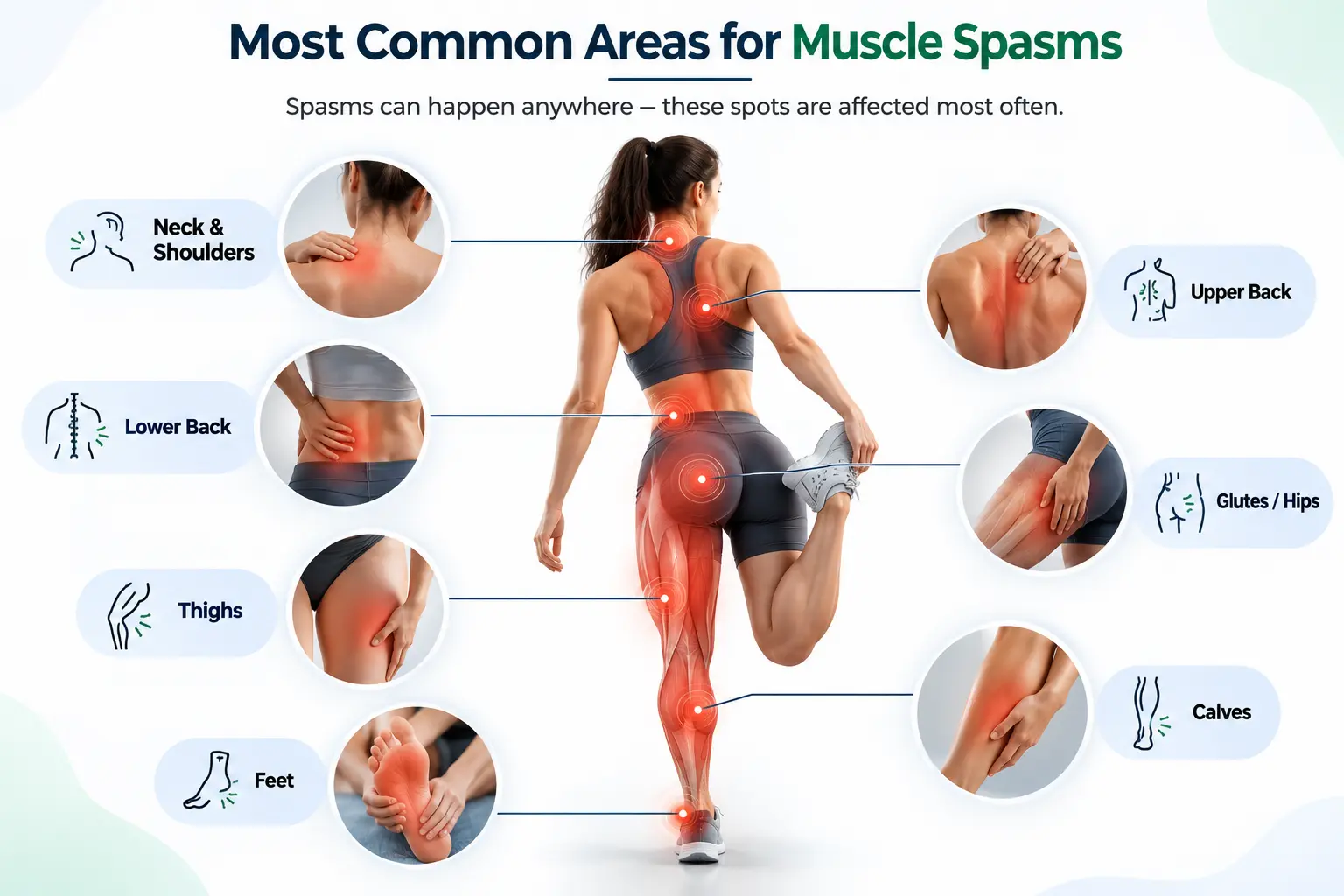
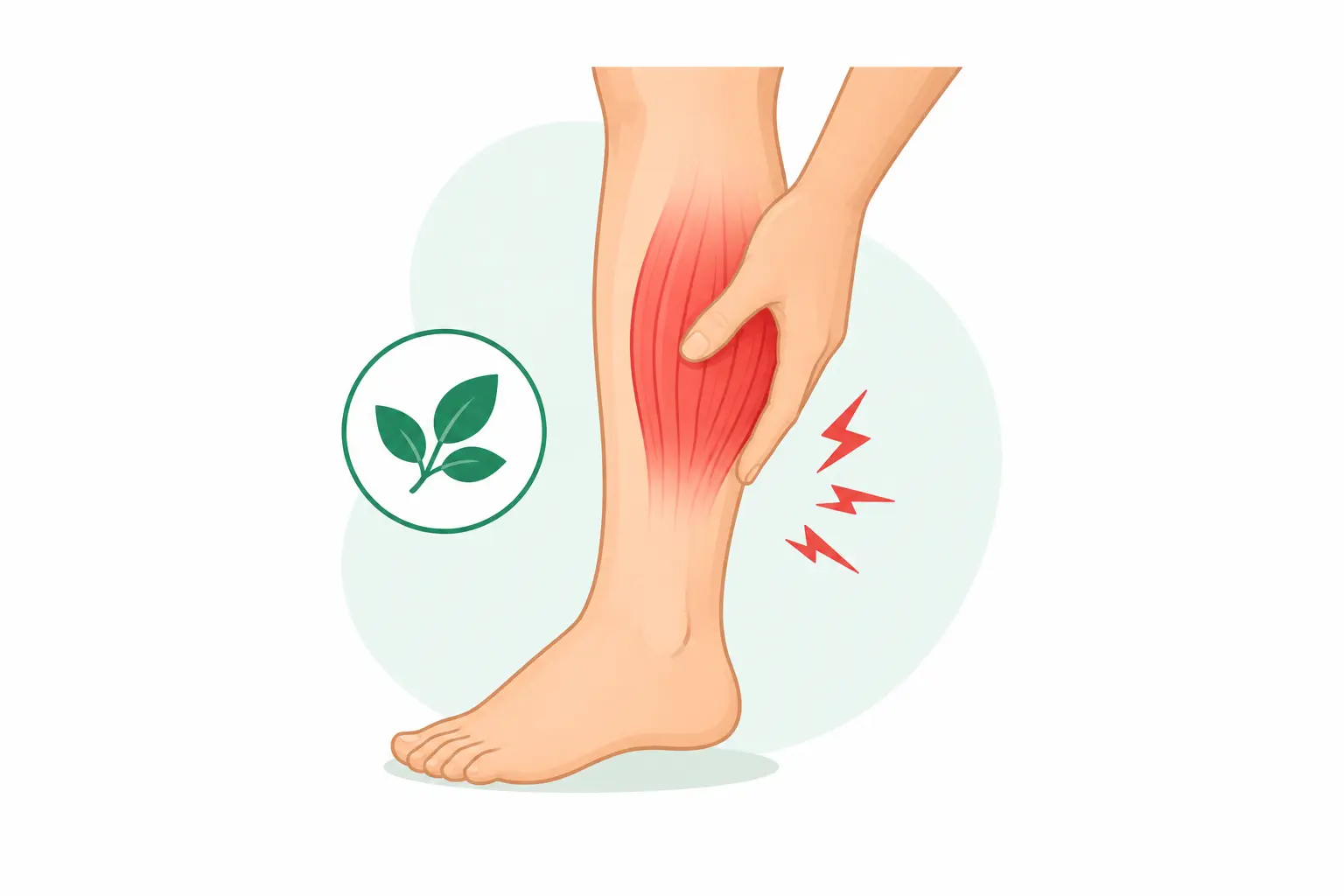
A muscle spasm is an involuntary contraction that causes a muscle to suddenly tighten and become difficult to relax. Muscle spasms can affect different parts of the body, including the legs, feet, calves, thighs, back, neck, and arms. Some are brief and mild, while others can be painful or last longer.
Muscle spasms are common and can occur after exercise, during periods of dehydration or fatigue, or because of certain medications, nerve problems, or underlying health conditions.
What Causes Muscle Spasms?
Dehydration
Not enough fluid makes muscles more prone to involuntary contractions, especially during or after activity—one of the most common, fixable causes.
Electrolyte imbalances
Sodium, potassium, calcium, and magnesium help muscles contract and relax properly. Low levels from sweating, medications, or diet can trigger spasms.
Muscle overuse or intense activity.
Muscles pushed harder than usual, especially in a shortened position, can develop a fatigue-spasm cycle—common in athletes and people starting new routines.
Prolonged sitting or awkward positions.
Long stretches in one position—desk work, travel, odd sleep postures—can compress muscles and nerves and trigger spasms once you move.
Stress and fatigue.
Physical and emotional stress increase muscle tension, and tired, overworked muscles cramp more easily.
Medication-related causes.
Some diuretics, asthma medications, and statins list muscle cramps as a side effect. If spasms started with a new prescription, review it with your provider.
Nerve compression or irritation.
A herniated disc or sciatica can irritate nerves controlling muscle movement, causing spasms in the lower back, buttock, or leg.
Circulation-related problems.
Reduced blood flow, seen with certain vascular conditions, may contribute to cramping during activity.
Nutritional deficiencies.
Low vitamin D or B vitamins have been linked to spasms in some people—worth confirming with bloodwork rather than assuming.
Often more than one factor is at play at once, which is why a healthcare provider is better positioned than a search engine to pinpoint your cause.
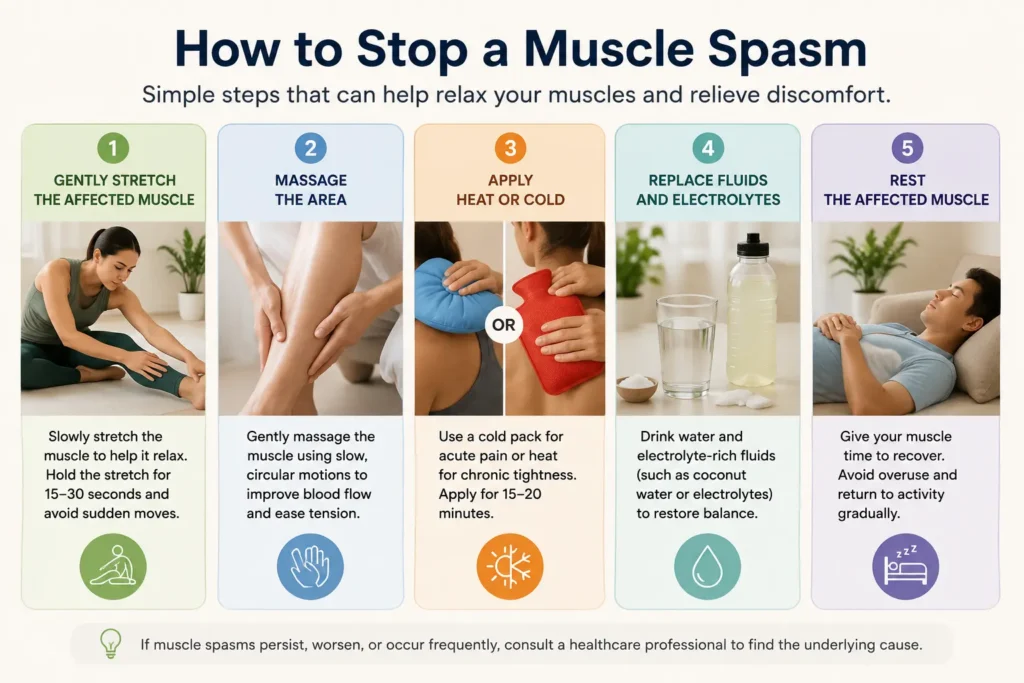
How to Stop a Muscle Spasm?
When a muscle spasm occurs, gently stretching and massaging the affected muscle may help it relax. Depending on the cause, walking around, applying heat or cold, and replacing fluids may also provide relief. Avoid forcing a painful stretch or continuing strenuous activity if the spasm is severe.
When Nerves or Neurological Conditions Are Involved
Yes, in some cases. The brain, spinal cord, and peripheral nerves control every muscle contraction. When something disrupts that signaling, muscles can contract involuntarily, twitch, or become stiff.
A few neurological conditions where spasms or abnormal muscle activity are commonly reported:
- Multiple sclerosis (MS)—damages the protective coating around nerves in the brain and spinal cord, which can cause muscle spasticity and spasms.
- ALS (amyotrophic lateral sclerosis)—a progressive motor neuron disease where muscle cramps and spasms are a frequently reported early symptom.
- Parkinson’s disease can involve muscle rigidity, cramping, and sustained contractions, particularly in the early morning or as medication wears off.
- Peripheral nerve disorders—including nerve entrapment, diabetic neuropathy, or spinal nerve root irritation, all of which can cause localized spasms or cramping. Peripheral neuropathy can sometimes be associated with muscle weakness, painful cramps, and involuntary muscle twitching. [Learn more about peripheral neuropathy from the National Institute of Neurological Disorders and Stroke.]
Importantly, having muscle spasms does not automatically mean you have a neurological disease. Most spasms are caused by far more common, benign factors like dehydration or overuse. Neurological conditions are typically accompanied by other symptoms—progressive weakness, numbness, and coordination problems—not spasms alone. If you’re concerned, the right move is a medical evaluation, not self-diagnosis.
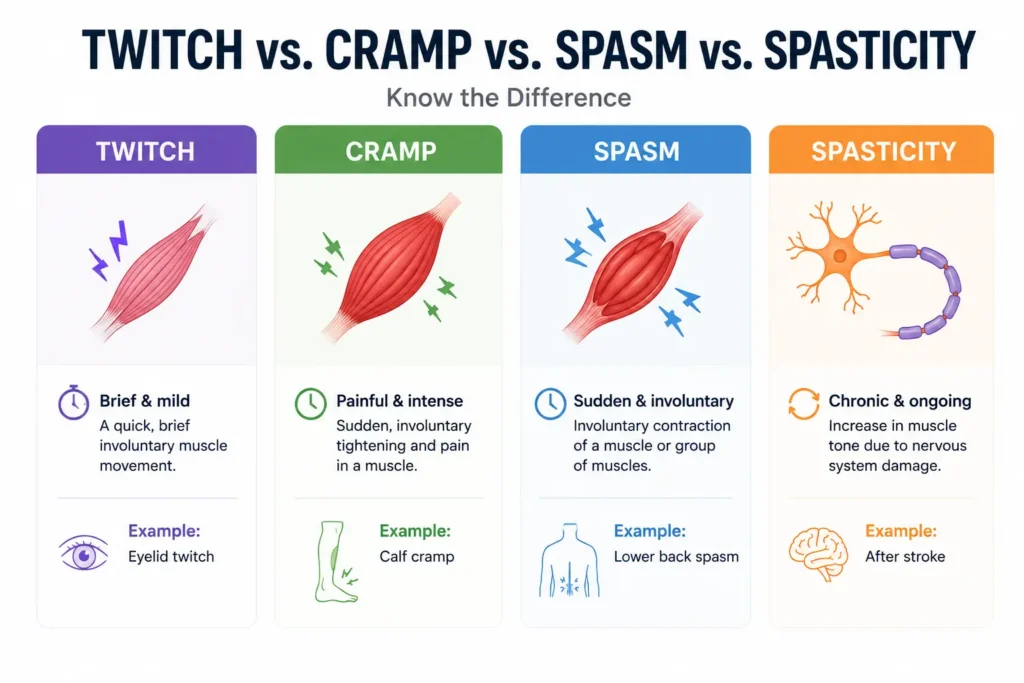
Muscle Spasms vs. Muscle Twitching: What’s the Difference?
| Symptom | What it usually feels like |
|---|---|
| Muscle spasm | Involuntary tightening or contraction of a muscle |
| Muscle cramp | Usually a sudden, painful, sustained muscle contraction |
| Muscle twitch | Small, brief involuntary movements or fluttering under the skin |
| Spasticity | Persistent muscle tightness or increased muscle tone, often associated with neurological conditions |
These terms can overlap, but they aren’t always interchangeable. The location, duration, pain level, and accompanying symptoms can help a healthcare professional determine what’s happening.
Why Do I Get Muscle Spasms at Night?
Muscle spasms at night may be related to muscle fatigue, dehydration, prolonged positions, sleeping posture, or certain medications. In some cases, nighttime spasms can also be associated with nerve or other underlying health problems.
Nighttime leg cramps are common, especially in older adults, with several possible contributors:
- Daytime physical activity that fatigues muscles, surfacing once you’re at rest
- Dehydration accumulated over the day
- Sleeping positions that keep the foot pointed and calf shortened for hours
- Certain medications, including some for blood pressure or cholesterol
- Underlying conditions like diabetes, thyroid disorders, or nerve compression, in a smaller subset of cases
For many people, the exact cause of nighttime cramps is never fully identified—research shows the mechanisms aren’t completely understood, even though the pattern itself is well documented. If nighttime spasms are frequent or disrupting your sleep regularly, that’s worth raising with a healthcare provider.
When Should You See a Doctor About Frequent Muscle Spasms?
Occasional, brief cramps after exercise usually aren’t concerning. But these patterns warrant evaluation:
- Spasms returning over weeks or months, or increasing in frequency or severity
- Noticeable muscle weakness in the affected area or elsewhere
- Numbness, tingling, or loss of sensation
- Difficulty walking, gripping objects, or performing daily tasks
- Persistent pain that doesn’t resolve with stretching or rest
- Spasms alongside other neurological symptoms—vision changes, slurred speech, coordination problems
- Symptoms interfering with sleep or quality of life
Seek emergency care immediately for sudden severe weakness on one side of the body, difficulty speaking, sudden vision loss, loss of bladder or bowel control, or spasms following a significant injury.
For everything short of that, a non-emergency visit with your primary care provider or a neurologist is the right next step, especially if spasms have persisted more than a few weeks.
How Are Recurring Muscle Spasms Evaluated?
A provider typically builds a picture from several sources: medical history and triggers; a medication review; a physical exam of strength and reflexes; symptom patterns (exercise, night, specific movements); lab testing when appropriate (electrolytes, kidney or thyroid function, vitamin D); and additional testing—nerve conduction studies, EMG, or MRI—when a neurological condition is suspected.
Not every patient needs every test. Most people with occasional spasms need little more than a history and exam; extensive testing is reserved for red-flag symptoms.
Treatment Options for Frequent Muscle Spasms
Muscle spasm treatment depends on the underlying cause, how often the spasms occur, and whether other symptoms are present. Treatment may include hydration, correcting electrolyte imbalances, rest, stretching, physical therapy, medication, or treatment for an underlying condition.
There’s no single treatment, since the right approach depends on the cause:
- Addressing dehydration or electrolyte imbalances when history or bloodwork points to it
- Rest and activity modification, particularly for overuse-related spasms
- Stretching or physical therapy, which can help prevent and relieve certain spasms and spasticity
- Treating the underlying condition—a nerve issue, thyroid disorder, or neurological condition like MS
- Medication prescribed by a healthcare professional, which may include muscle relaxants depending on diagnosis
- Other supportive approaches, such as heat therapy, massage, or hydration adjustments
This article can’t tell you which applies to your situation—that requires an individual evaluation. It can help you have a more informed conversation with a provider.
Can Medical Cannabis Help With Muscle Spasms?
The honest answer: it depends on the underlying cause, and the evidence varies by condition.
The strongest evidence involves multiple sclerosis. A 2017 review by the National Academies of Sciences, Engineering, and Medicine (NASEM) found substantial evidence that oral cannabinoids can improve patient-reported spasticity in adults with MS, a conclusion echoed by the American Academy of Neurology. Nabiximols, a cannabis-derived oral spray, is approved in several countries specifically for this use.
That said, when researchers use objective clinical tests rather than patient-reported feelings, the benefit is less consistent—some trials found no measurable difference from placebo, even when patients felt better. This gap remains an active area of research.
For many other causes of muscle spasms—everyday cramps from dehydration or overuse and conditions like ALS or Parkinson’s—high-quality cannabis-specific evidence is limited. That doesn’t mean cannabis has no role, but the evidence base is thinner, and claims of guaranteed benefit wouldn’t be accurate.
Cannabis isn’t risk-free. THC can cause short-term cognitive effects like impaired memory and reaction time, which is why driving after use isn’t recommended. Regular, heavy use is linked to a higher dependence risk, and long-term high-THC use is associated with cognitive effects researchers are still studying. Cannabis can also interact with certain medications and may not suit everyone.
Bottom line: medical cannabis is not a proven cure for muscle spasms, and it doesn’t work the same way for every patient or condition. For some—particularly those with MS-related spasticity—there’s a reasonable evidence base supporting its use as part of a broader plan. For other causes, evidence is still developing. This is exactly the kind of decision worth discussing with a qualified healthcare professional who can weigh your diagnosis, symptoms, and history.
How Can Venice Care Help?
If recurring muscle spasms have you exploring whether medical cannabis might be worth discussing, Venice Care provides medical cannabis evaluations for eligible patients in Venice, Florida. Our licensed physicians review your medical history and symptoms and help you understand whether you may qualify for certification under Florida law—including for qualifying conditions such as chronic muscle spasms, multiple sclerosis, ALS, Parkinson’s disease, and seizure disorders.
We’re not here to promise a cure. We’re here to have an honest, evidence-informed conversation about whether medical cannabis is worth considering alongside the rest of your care and to guide you through evaluation and certification if it is.
If frequent muscle spasms are affecting your daily life, schedule a medical cannabis evaluation with Venice Care to discuss your options with a licensed Florida physician.
Frequently Asked Questions About Muscle Spasms
Get clear answers to common questions about recurring muscle spasms, possible causes, warning signs, and treatment options.
Recurring muscle spasms are often caused by dehydration, electrolyte imbalances, muscle overuse, or fatigue. Less commonly, they may be related to certain medications, nerve irritation, or a neurological condition. A healthcare provider can help identify what’s causing your specific symptoms.
Frequent spasms may warrant medical evaluation if they occur with weakness, numbness, difficulty walking, or other neurological symptoms, or if they are becoming more severe. Sudden symptoms such as one-sided weakness or trouble speaking require emergency medical attention.
Yes. Not getting enough fluids, especially during or after exercise, can contribute to muscle cramps and spasms. Replacing fluids and electrolytes may help when dehydration is contributing to the problem.
Yes. Conditions such as multiple sclerosis, ALS, and Parkinson’s disease can cause muscle spasms or spasticity by affecting communication between the nervous system and muscles. However, having muscle spasms alone does not mean you have a neurological condition.
It may help some patients, particularly those with MS-related spasticity, where research support is stronger. Evidence is more limited for other causes. Medical cannabis isn’t a guaranteed solution and should be discussed with a qualified healthcare professional based on your specific condition.
This article is for general educational purposes only and is not a substitute for professional medical advice, diagnosis, or treatment. Always consult a qualified healthcare provider about your individual symptoms and treatment options.