
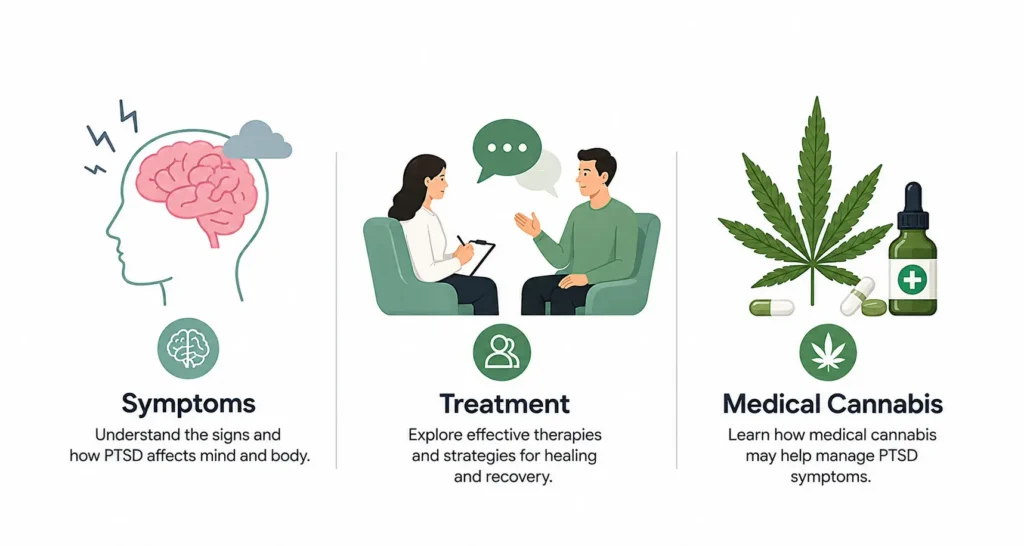
Including the emerging role of medical cannabis in symptom management
Does it feel like your body never got the message that the danger has passed? Loud noises. Certain smells. A quiet moment alone. Any of these can pull you back into a moment you survived long ago. If this sounds like you, you’re not overreacting. And PTSD is treatable.
This guide covers what PTSD is, how it’s diagnosed, and the treatments with the strongest evidence — plus where medical cannabis fits in, honestly, without overpromising.
Key Takeaways
| Topic | Key Point |
|---|---|
| PTSD diagnosis | A real, diagnosable condition that can develop after trauma. It is not a sign of weakness. |
| Best-supported treatment | Trauma-focused therapy (like CBT and EMDR) and, often, medication. |
| Medical cannabis | Some patients say it helps with nightmares, sleep problems, and feeling on edge, but research is still developing. |
| THC vs. CBD | They affect the body differently. Talk to a doctor before using either one—don’t self-dose. |
| The science | Scientists have found a link between cannabinoids and how the brain processes fear, but small studies aren’t proof it works for everyone. |
| When to seek help | If PTSD symptoms are hurting your daily life, work, relationships, or safety, it’s time to talk to a provider. |
What Is Post-Traumatic Stress Disorder (PTSD)?
PTSD is a mental health condition that can develop after a person goes through, or witnesses, a traumatic or life-threatening event, with symptoms lasting a month or longer. According to the National Institute of Mental Health, most people who experience a traumatic event do not go on to develop PTSD.
Doctors see PTSD as more than being upset — it involves real changes in how the brain handles fear, memory, and threat.
Almost everyone feels shaken after a frightening event: trouble sleeping, feeling jumpy, and intrusive thoughts. For most people, though, these fade within a few weeks. PTSD is different — symptoms stick around past a month and start interfering with work, relationships, sleep, and daily life.
Still, not everyone who lives through trauma develops PTSD. Risk depends on how severe the trauma was, mental health history, available support, and biology. Left untreated, PTSD can touch nearly every part of daily life. The good news, however, is that it responds well to treatment.
What Are the Symptoms of PTSD?
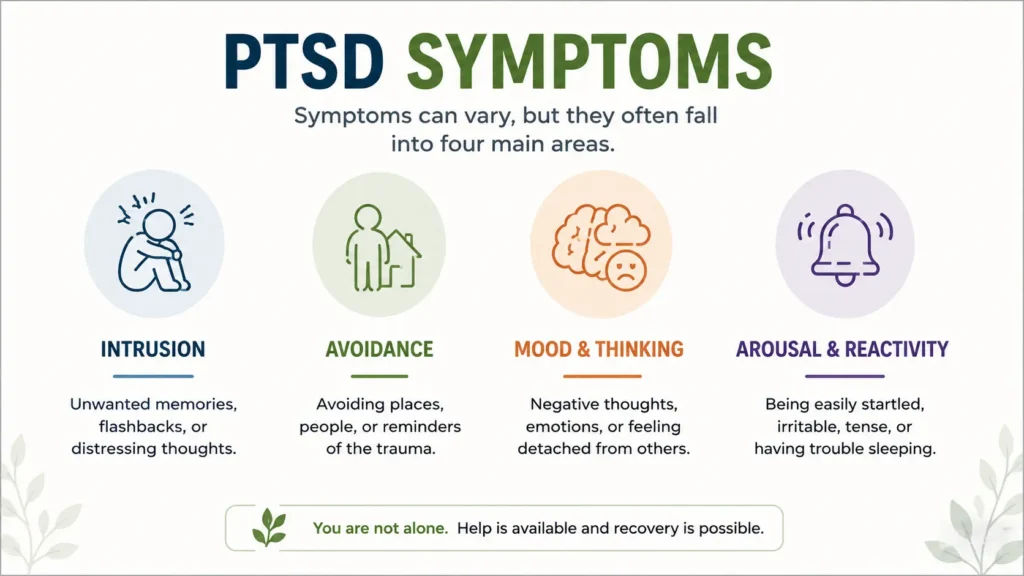
PTSD symptoms fall into four main groups, as described by Mayo Clinic. A diagnosis usually requires symptoms from each group, lasting more than a month.
- Re-experiencing: Intrusive memories or flashbacks. Recurring nightmares. Strong reactions to reminders.
- Avoidance: Steering clear of people, places, or situations tied to the memory. Avoiding talk about what happened.
- Negative mood and thinking: Persistent negative beliefs. Guilt or blame that doesn’t fit the facts. Losing interest in things you used to enjoy. Feeling numb. Trouble concentrating.
- Arousal and reactivity: Feeling constantly on guard. Getting startled easily. Irritability or anger. Trouble sleeping. Panic attacks or heavy anxiety.
Symptoms look different from person to person. Some struggle most with nightmares and sleep. Others struggle more with feeling on edge or numb. That’s why every treatment plan needs to fit the individual.
What Causes PTSD?
PTSD can develop after any event involving real or threatened death, serious injury, or sexual violence. This includes events you experienced directly, watched happen to someone else, or learned happened to someone close to you.
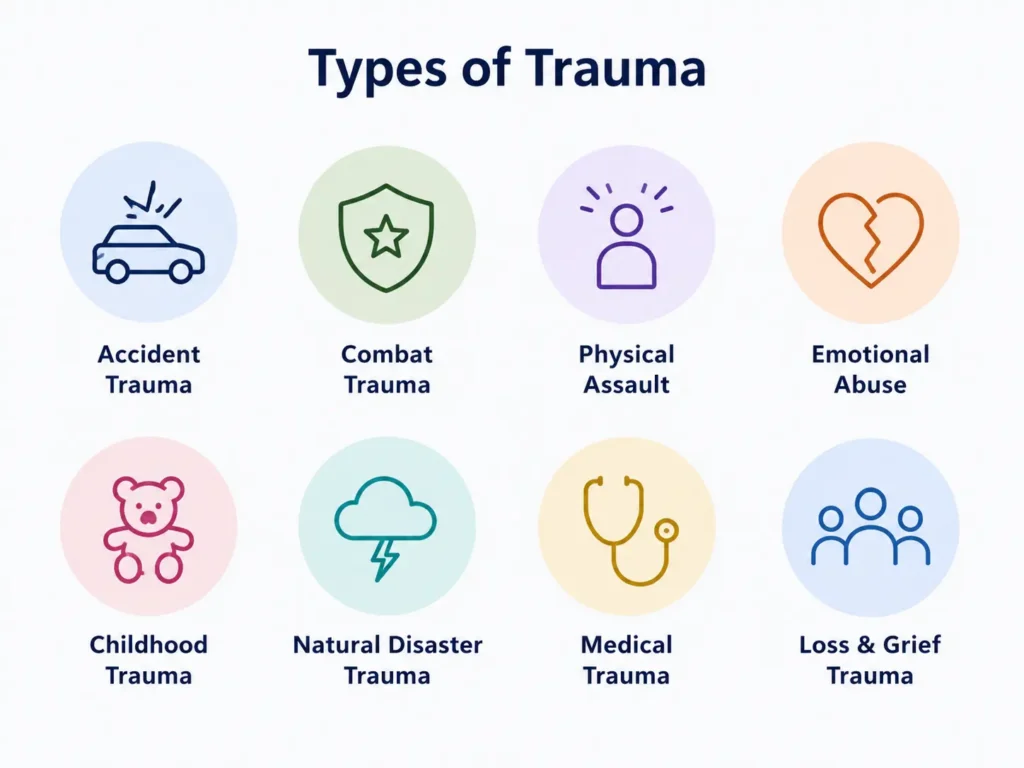
Common causes include military combat, serious accidents, abuse, violence, natural disasters, sexual assault, life-threatening illness, and witnessing someone else’s trauma. First responders, healthcare workers, and military personnel also face repeated exposure through their work.
That said, going through trauma doesn’t guarantee a PTSD diagnosis—most people who experience trauma do not develop it. Risk instead depends on the trauma’s severity, trauma history, genetics, existing conditions, and how strong a person’s support system is.
How Is PTSD Treated?
The most effective PTSD treatment is trauma-focused psychotherapy. It’s often combined with medication, and the right plan depends on the person’s symptoms and history. This section covers how to treat post-traumatic stress disorder, including therapy for PTSD treatment specifically.
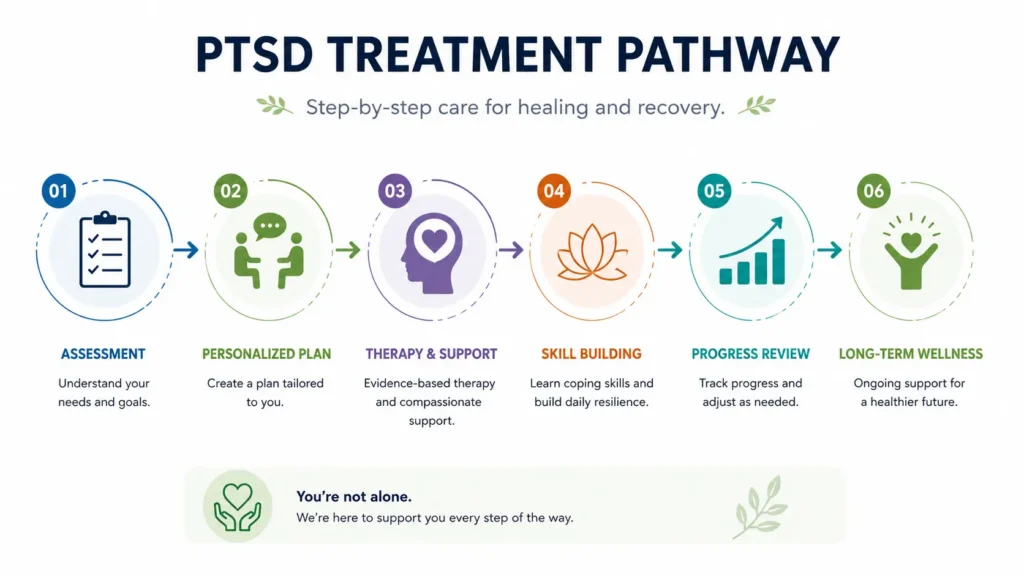
Trauma-focused psychotherapy is usually the first line of treatment: CBT, CPT, Prolonged Exposure Therapy, and EMDR. Each helps patients process trauma memories differently, and the National Center for PTSD offers a detailed breakdown of how each works.
Medication can help too. The FDA has approved certain SSRIs for PTSD, and doctors commonly prescribe them for anxiety, depression, and intrusive thoughts. Other medications may target nightmares or sleep problems.
Lifestyle habits also support recovery without replacing clinical treatment: exercise, a steady sleep routine, mindfulness, and social support.
The right combination depends on your symptoms, history, and how you respond over time—which is why an evaluation matters so much.
Can Medical Cannabis Help With PTSD?
Some PTSD patients say medical cannabis helps with specific symptoms—sleep problems, nightmares, anxiety, and feeling on edge. But it is not a cure, and it’s not a stand-alone, first-line treatment. What patients say and what science has proven don’t always line up.
Why some patients report benefits. People with PTSD often say cannabis helps them fall asleep faster, with fewer nightmares, and feel calmer in moments that would normally trigger panic. In fact, these reports are common enough that PTSD qualifies for medical cannabis programs in many states.
What research suggests. Small clinical trials have found some reduction in self-reported symptoms, especially around sleep and nightmares, and scientists are also studying how cannabinoids affect the brain’s fear circuits (more below). However, patient reports aren’t the same as large, controlled trials—much of the research uses small groups, short timeframes, or animal models. As a result, some studies show no real difference from a placebo or point to risks like more anxiety at certain doses.
Why medical supervision matters. Cannabis affects everyone differently—dose, THC-to-CBD ratio, body chemistry, and other medications all play a role. The wrong product could make anxiety or sleep worse, so always discuss cannabis for PTSD with a qualified provider who can monitor your progress. If you’d like to explore this, our team can help you understand whether you may be a candidate as part of PTSD and medical cannabis care at Venice Care.
THC vs. CBD for PTSD: What’s the Difference?
THC and CBD are both found in cannabis, but they work differently—THC is psychoactive and binds directly to cannabinoid receptors, while CBD doesn’t cause a high and works more indirectly on the same system.
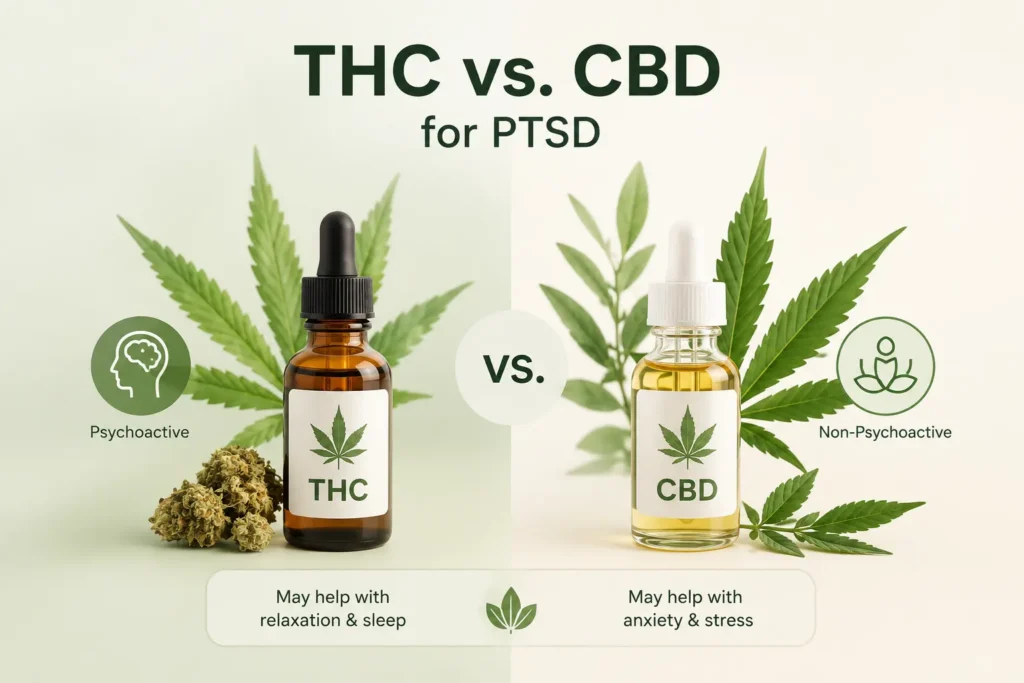
Some PTSD patients say medical cannabis helps with specific symptoms — sleep problems, nightmares, anxiety, and feeling on edge. But it is not a cure, and it’s not a stand-alone, first-line treatment. What patients say and what science has proven don’t always line up.
Why some patients report benefits. People with PTSD often say cannabis helps them fall asleep faster, with fewer nightmares, and feel calmer in moments that would normally trigger panic. In fact, these reports are common enough that PTSD qualifies for medical cannabis programs in many states.
What research suggests. Small clinical trials have found some reduction in self-reported symptoms, especially around sleep and nightmares, and scientists are also studying how cannabinoids affect the brain’s fear circuits (more below). However, patient reports aren’t the same as large, controlled trials—much of the research uses small groups, short timeframes, or animal models. As a result, some studies show no real difference from a placebo or point to risks like more anxiety at certain doses.
Why medical supervision matters. Cannabis affects everyone differently—dose, THC-to-CBD ratio, body chemistry, and other medications all play a role. The wrong product could make anxiety or sleep worse, so always discuss cannabis for PTSD with a qualified provider who can monitor your progress. If you’d like to explore this, our team can help you understand whether you may be a candidate as part of PTSD and medical cannabis care at Venice Care.
What Does Research Say About Cannabis and PTSD?
Research on cannabis and PTSD centers on how the endocannabinoid system handles fear and threat—a promising area of study but one that hasn’t yet proven cannabis reliably treats PTSD in humans.
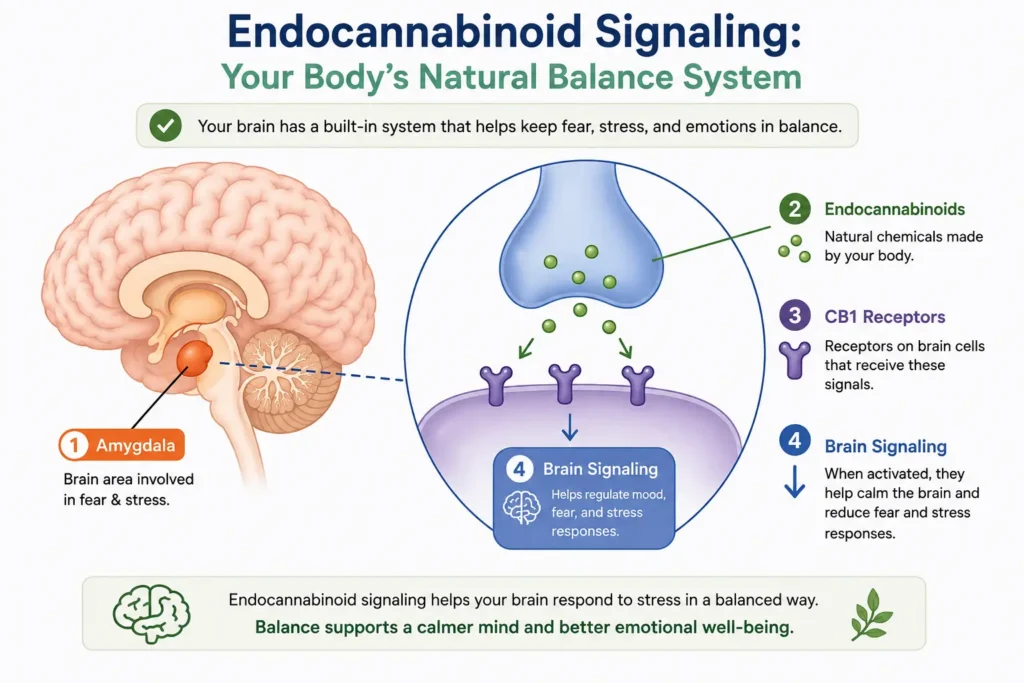
What’s been shown. People with PTSD have measurable differences in their endocannabinoid system, including altered levels and receptor activity. The system plays a role in “fear extinction”—how the brain learns a past threat is no longer dangerous, a process often impaired in PTSD. Imaging studies show cannabinoids can influence activity in the amygdala and related fear circuits.
What’s hypothesized and what’s uncertain. Researchers think cannabinoid-based approaches might help the brain let go of trauma-related fear. Still, most research comes from animal studies or small trials — not the large, long-term studies needed to prove it works. In addition, long-term effects of regular use aren’t well understood, and some evidence points to risks like dependence and worse anxiety. There is also no FDA-approved cannabis medication made specifically for PTSD.
Overall, the most responsible view is to treat cannabis as a possible complementary option worth discussing with a provider — not a proven, stand-alone cure.
When Should You Seek Help for PTSD?
Seek professional support when trauma-related symptoms last more than a month and start interfering with your work, relationships, sleep, or daily life.
Watch for these signs: trouble at work or school, strain in relationships, ongoing sleep problems or nightmares, avoiding more people or places, persistent guilt or numbness, using substances to cope, or trouble feeling safe with no real danger.
Reaching out early tends to lead to better outcomes. But it’s never too late—some people seek treatment years later and still see real improvement.
If you or someone you know is having thoughts of self-harm or suicide, don’t wait to get help. In the U.S., call or text 988 to reach the 988 Suicide & Crisis Lifeline, available 24/7, or go to your nearest emergency room. Veterans can call 988 and press 1 or text 838255.
What Does Research Say About Cannabis and PTSD?
Research on cannabis and PTSD centers on how the endocannabinoid system handles fear and threat—a promising area of study but one that hasn’t yet proven cannabis reliably treats PTSD in humans.
Frequently Asked Questions About PTSD Treatment
What is the most effective treatment for PTSD?
Trauma-focused therapies have the strongest support—especially CPT, Prolonged Exposure Therapy, and EMDR. Doctors also often prescribe certain SSRIs alongside therapy. The best approach depends on the person’s symptoms and history.
How do you treat post-traumatic stress disorder?
Mainly through trauma-focused psychotherapy—CBT, CPT, Prolonged Exposure Therapy, and EMDR are the most studied approaches. Doctors often combine therapy with medication, particularly SSRIs, tailored to the person’s symptoms and history.
Can PTSD go away on its own?
For some people, mild symptoms fade within the first month. However, PTSD lasting longer than a month usually doesn’t resolve on its own, and it can worsen over time. Evidence-based treatment greatly improves the chances of lasting recovery.
What are the first signs of PTSD?
Early signs often include intrusive memories, nightmares, trouble sleeping, feeling on edge, irritability, and avoiding reminders of the event. If these stick around and disrupt your life, it’s time to get checked out.
Can medical cannabis help with PTSD?
Some patients say medical cannabis helps with nightmares, poor sleep, and feeling on edge. However, research into how cannabinoids affect fear processing is ongoing and not yet conclusive. It may be worth discussing with a provider as a complementary option, not a replacement for proven treatment.
Does cannabis help PTSD nightmares?
Some patients and small studies report fewer nightmares with certain cannabis use, especially THC. Still, evidence is limited, results vary by person, and higher doses or long-term use can hurt sleep quality instead of helping it.
What is the difference between THC and CBD for PTSD?
THC is psychoactive and binds directly to receptors tied to fear and memory, so some patients feel better at low doses but worse at higher ones. CBD, on the other hand, doesn’t cause a high and is linked to calming effects, with milder side effects overall.
When should someone seek treatment for PTSD?
Seek treatment when symptoms last more than a month and start disrupting daily life. Overall, earlier help tends to lead to better outcomes, but treatment can still help years later.
Getting Support at Venice Care
PTSD is treatable, and no one has to manage it alone. Whether you’re just starting to understand what’s happening or you’ve tried treatment before and want more options, a proper evaluation is the best next step.
Curious whether medical cannabis could have a role in your care, alongside proven treatment? Our clinicians can walk you through the evidence and whether you may be a candidate. Schedule a consultation with Venice Care to talk through your options.