
Understanding Post-Traumatic Stress Disorder (PTSD)
Post-traumatic stress disorder (PTSD) is a mental health condition that can develop after a person experiences or witnesses a traumatic event. Trauma can come from many sources—an accident, an assault, a natural disaster, combat, or the sudden loss of a loved one—and it can affect anyone, regardless of age or background. For some people, the impact of that event doesn’t fade with time; instead, it continues to show up in the way they think, feel, and function day to day.
PTSD symptoms can affect emotions, sleep, relationships, concentration, and everyday activities. Someone living with PTSD may feel on edge, avoid certain people or places, struggle with nightmares or insomnia, or find it hard to stay focused at work or school. These symptoms are not a sign of weakness—they are a recognized response to trauma. PTSD is treatable, and a professional evaluation is the first step toward understanding your symptoms and finding a path forward.
What Is PTSD?
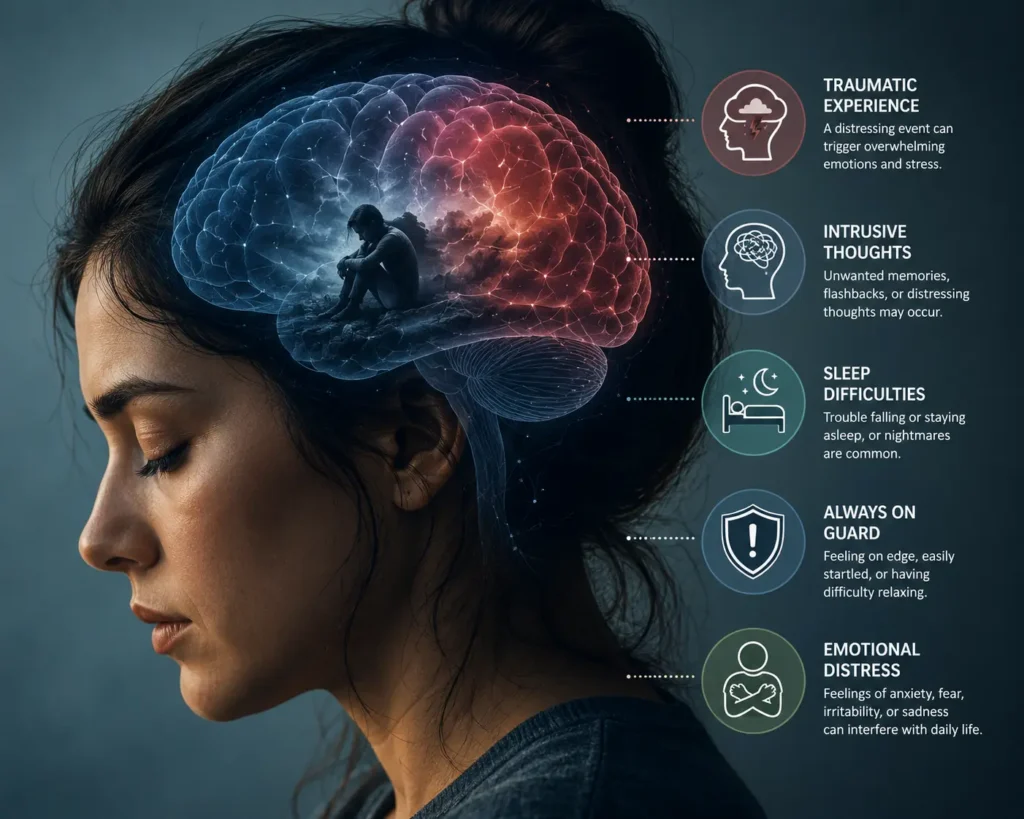
Direct answer: PTSD is a mental health condition that can develop after a person experiences or witnesses a traumatic or life-threatening event. It involves a group of symptoms—including intrusive memories, avoidance behaviors, changes in mood and thinking, and changes in arousal or reactivity—that persist beyond the immediate aftermath of the trauma and interfere with daily life.
Table A—How PTSD Can Affect Daily Life
| Area | Possible Impact |
|---|---|
| Sleep | Nightmares or difficulty sleeping |
| Emotions | Fear, anger, guilt, or distress |
| Thinking | Difficulty concentrating or negative thoughts |
| Relationships | Withdrawal or feeling disconnected |
| Daily activities | Difficulty functioning at work or home |
What Are the Symptoms of PTSD?
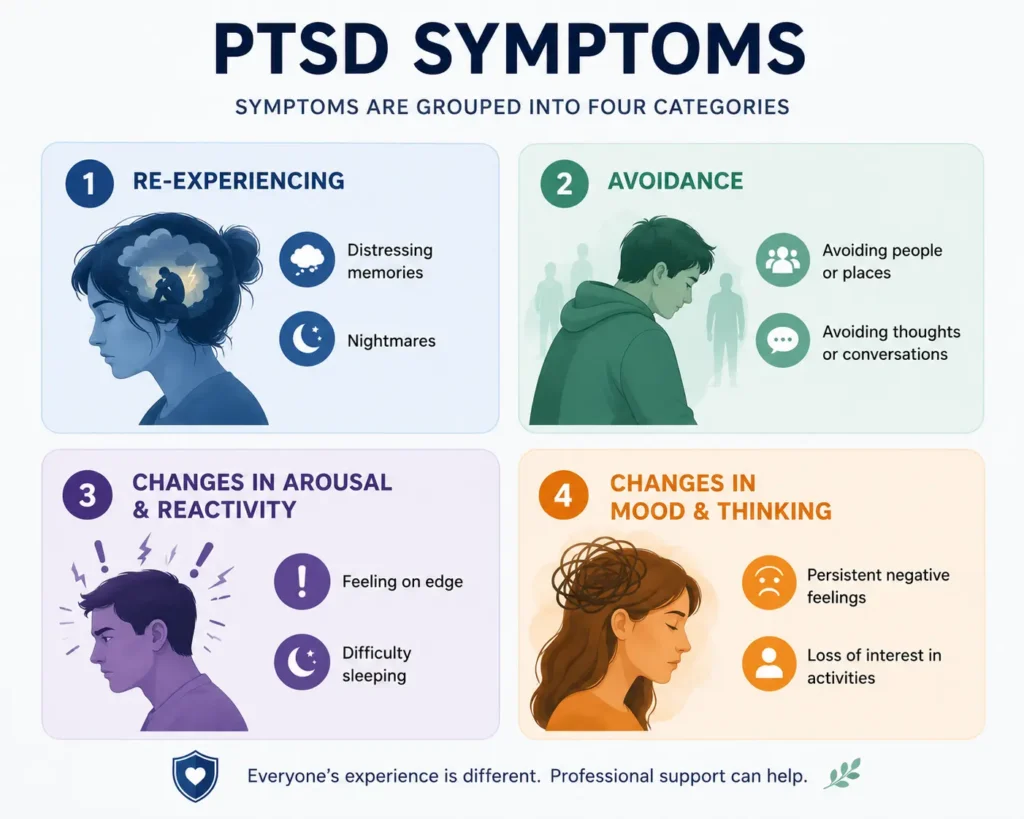
PTSD symptoms are generally grouped into four categories. Not everyone experiences every symptom, and severity can vary from person to person.
Re-experiencing
- Unwanted, intrusive memories of the traumatic event
- Flashbacks or feeling like the event is happening again
- Distressing dreams or nightmares related to the trauma
- Strong emotional or physical reactions to reminders of the event
Avoidance
- Avoiding thoughts, feelings, or conversations connected to the trauma
- Avoiding people, places, or activities that serve as reminders
- Difficulty recalling important details of the event
Changes in Arousal and Reactivity
- Feeling constantly on edge or easily startled
- Trouble sleeping or concentrating
- Irritability or angry outbursts
- Engaging in risky or self-destructive behavior
Changes in Mood and Thinking
- Persistent negative thoughts about oneself or the world
- Ongoing feelings of fear, guilt, or shame
- Loss of interest in activities once enjoyed
- Feeling detached or estranged from others
When Should You Seek Help for PTSD?
Direct answer: It may be time to seek professional evaluation when trauma-related symptoms are persistent, distressing, or begin to interfere with sleep, relationships, work, or daily functioning—especially if those symptoms last longer than a month or worsen over time.
Trauma reactions in the days immediately following an event are common and often ease with time. However, when symptoms don’t improve, or when they start to disrupt your ability to function or feel safe, a licensed mental health professional can help determine what’s going on and what treatment options may help.
What Can Cause PTSD?
Direct answer: PTSD can develop after a person directly experiences or witnesses a traumatic or life-threatening event. However, not everyone who is exposed to trauma develops PTSD—individual risk depends on many factors, including the nature of the event, prior experiences, and available support.
Table B—Possible Traumatic Experiences
| Traumatic Experience | Examples |
|---|---|
| Accidents | Serious vehicle or workplace accidents |
| Violence | Assault or other violent experiences |
| Abuse | Physical, emotional, or sexual abuse |
| Disasters | Natural disasters or life-threatening events |
| Military experiences | Combat or other traumatic military experiences |
| Serious injury or loss | Witnessing serious injury or death |
PTSD Treatment Options
Direct answer: The most effective, evidence-based treatment for PTSD is trauma-focused psychotherapy—such as CBT, CPT, prolonged exposure therapy, and EMDR—often combined with medication such as SSRIs. Venice Care’s role is to evaluate whether medical cannabis may be an appropriate complementary option alongside proven treatment, not a replacement for it.
Trauma-Focused Psychotherapy
Trauma-focused talk therapies are considered the first-line, best-supported treatment for PTSD. These include:
- Cognitive Processing Therapy (CPT)—helps people examine and reframe unhelpful beliefs connected to their trauma
- Prolonged Exposure Therapy—helps people gradually and safely approach trauma-related memories and situations they’ve been avoiding
- EMDR (Eye Movement Desensitization and Reprocessing)—uses guided eye movements or other bilateral stimulation to help the brain process traumatic memories
- CBT (Cognitive Behavioral Therapy)—a broader approach that helps identify and change unhelpful thought and behavior patterns
Note: Venice Care’s evaluation process focuses on medical cannabis certification. Patients seeking trauma-focused psychotherapy directly should ask whether Venice Care provides in-house therapy referrals or confirm this is offered elsewhere as part of a coordinated care plan.
Medication
Doctors commonly prescribe certain FDA-approved SSRIs for PTSD, often alongside therapy, to help manage anxiety, depression, and intrusive thoughts. Other medications may target nightmares or sleep problems specifically. Medication decisions are made by a qualified prescriber based on individual clinical needs.
Medical Cannabis as a Complementary Option
Some PTSD patients report that medical cannabis helps with specific symptoms—sleep problems, nightmares, anxiety, and feeling on edge. Research into how cannabinoids affect the brain’s fear-processing circuits is ongoing but not yet conclusive, and medical cannabis is not a cure or a stand-alone, first-line treatment. Because cannabis affects everyone differently—dose, THC-to-CBD ratio, body chemistry, and other medications all play a role—it should only be used under medical supervision.
Venice Care’s PTSD evaluations focus on helping eligible patients understand whether medical cannabis may be an appropriate complementary option to discuss alongside proven treatment as part of Florida’s medical marijuana certification program.
Lifestyle Support
Habits such as regular exercise, a steady sleep routine, mindfulness practices, and a strong support system can support recovery alongside—not in place of—clinical treatment.
Frequently Asked Questions About PTSD
What is PTSD?
PTSD is a mental health condition that can develop after experiencing or witnessing a traumatic event, causing symptoms such as intrusive memories, avoidance, and changes in mood or arousal that persist over time.
What are the symptoms of PTSD?
Common symptoms include re-experiencing the trauma, avoiding reminders of it, negative changes in mood or thinking, and increased arousal or reactivity, such as being easily startled.
Can PTSD be treated?
Yes. PTSD is treatable. Many people see meaningful improvement with an individualized treatment plan that may include psychotherapy, medication, or both.
What therapy is used for PTSD?
Common evidence-based therapies include Cognitive Processing Therapy (CPT), Prolonged Exposure Therapy, and EMDR. A clinician can help determine which approach fits your needs.
How long does PTSD treatment take?
Treatment length varies by individual and depends on symptom severity, treatment approach, and personal progress. A provider can give a more specific estimate after evaluation.
Can PTSD develop years after trauma?
Yes. In some cases, PTSD symptoms don’t appear until months or even years after the traumatic event, a pattern sometimes referred to as delayed-onset PTSD.
Can PTSD affect sleep?
Yes. Nightmares, insomnia, and difficulty staying asleep are common symptoms of PTSD.
Can PTSD go away?
With appropriate treatment, many people experience significant symptom improvement over time. Outcomes vary by individual, so it’s best to discuss expectations with a provider.
When should I seek treatment for PTSD?
If trauma-related symptoms are persistent, distressing, or interfering with daily life for more than a month, it’s a good time to seek a professional evaluation.
Is PTSD only experienced by veterans?
No. While PTSD is common among veterans, it can affect anyone who has experienced or witnessed a traumatic event, including survivors of accidents, abuse, disasters, or violence.
What does PTSD stand for?
PTSD stands for post-traumatic stress disorder, sometimes spelled posttraumatic stress disorder. It refers to a mental health condition that can develop after a traumatic experience.